Arequipa: A Mystic White City Guarded by Active Volcanoes
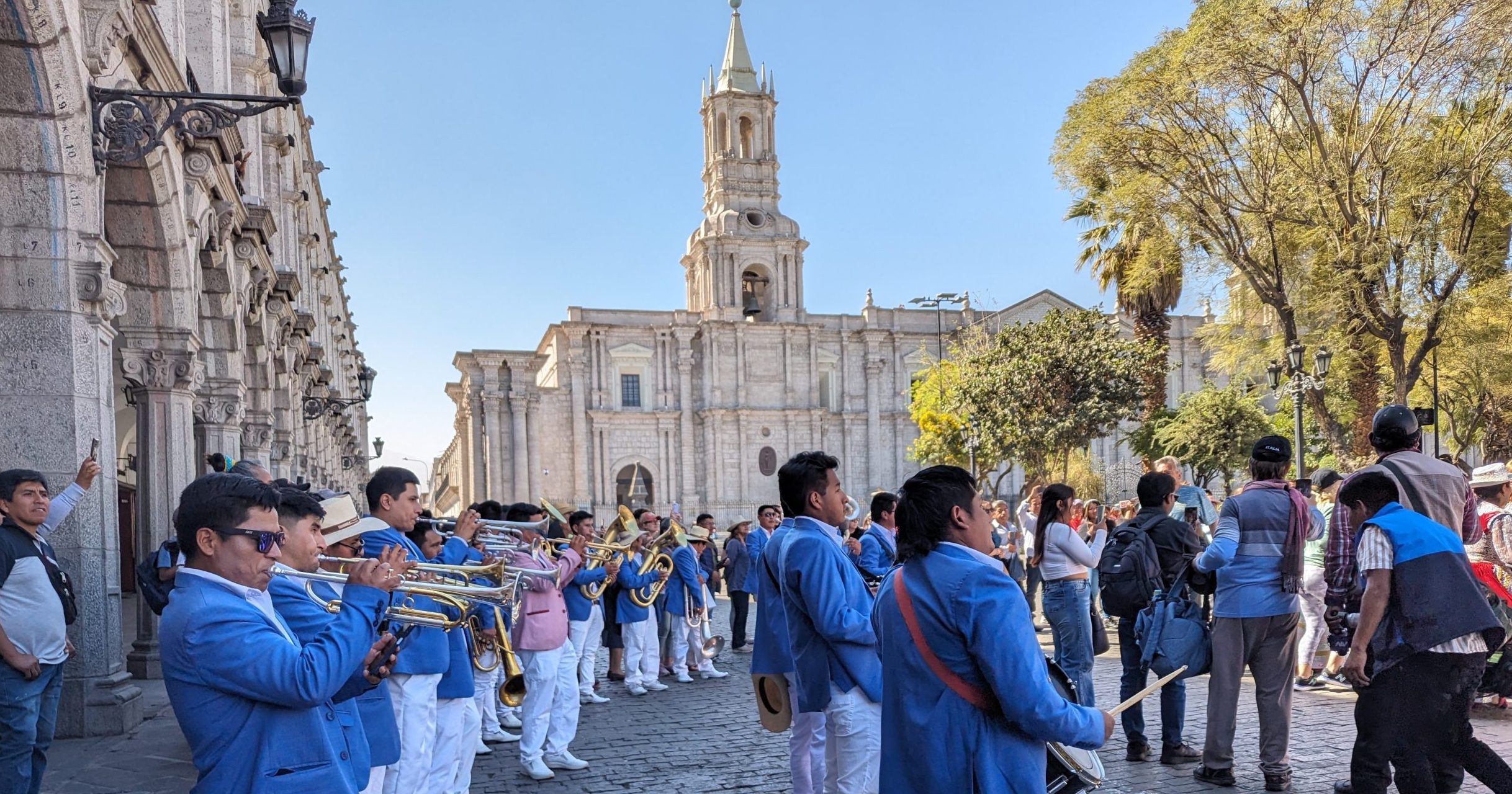
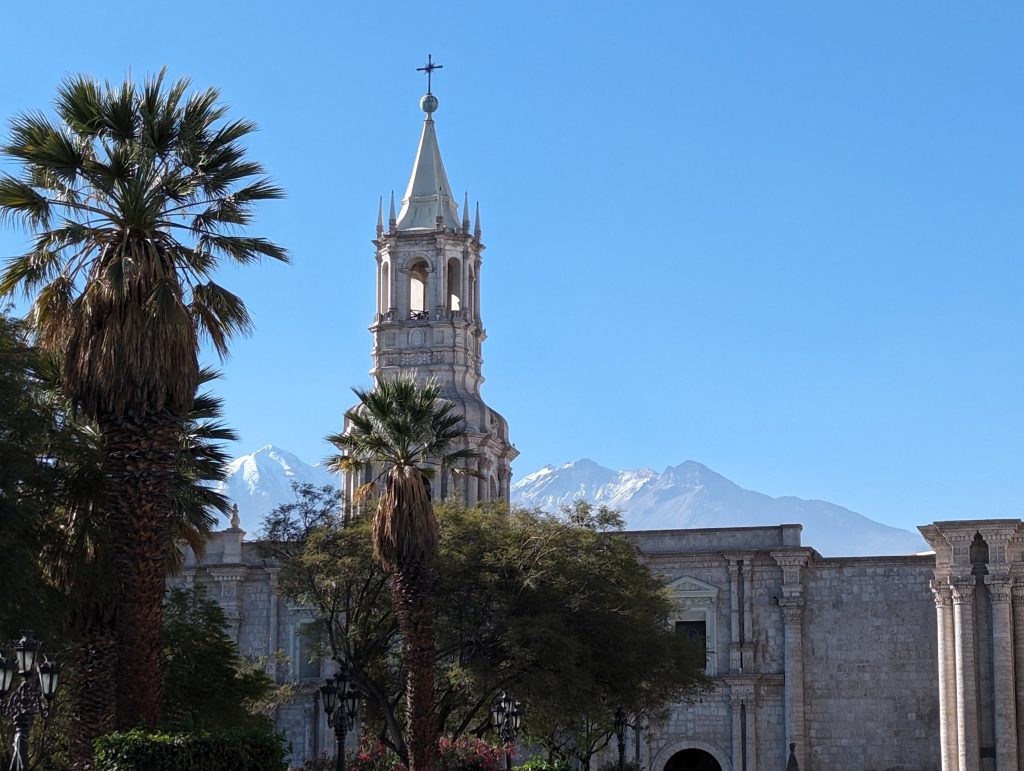
It is May and the sky is blue in Arequipa. The sky contrasts with white colonial buildings, volcanoes in the background, and the Chili river that crosses the city from north to south. The constructions are big, the city is flat, the streets are wide. There is a sense of openness.
We arrived in Arequipa after taking an overnight Cruz del Sur bus from Cusco (the first overnight in our gap year). The bus itself was better than what we anticipated. Huge reclinable seats, dimming lights, dark curtains. The perfect conditions for sleeping, except that we didn’t. At 5:30 a.m. as the sun was rising we were getting close to Arequipa. The landscape was dry, all shades of brown in the horizon. Where there were crops, the green would stand out dramatically against the arid ground, a beautiful sight.
Sillar: The volcanic rock used in Arequipa’s construction
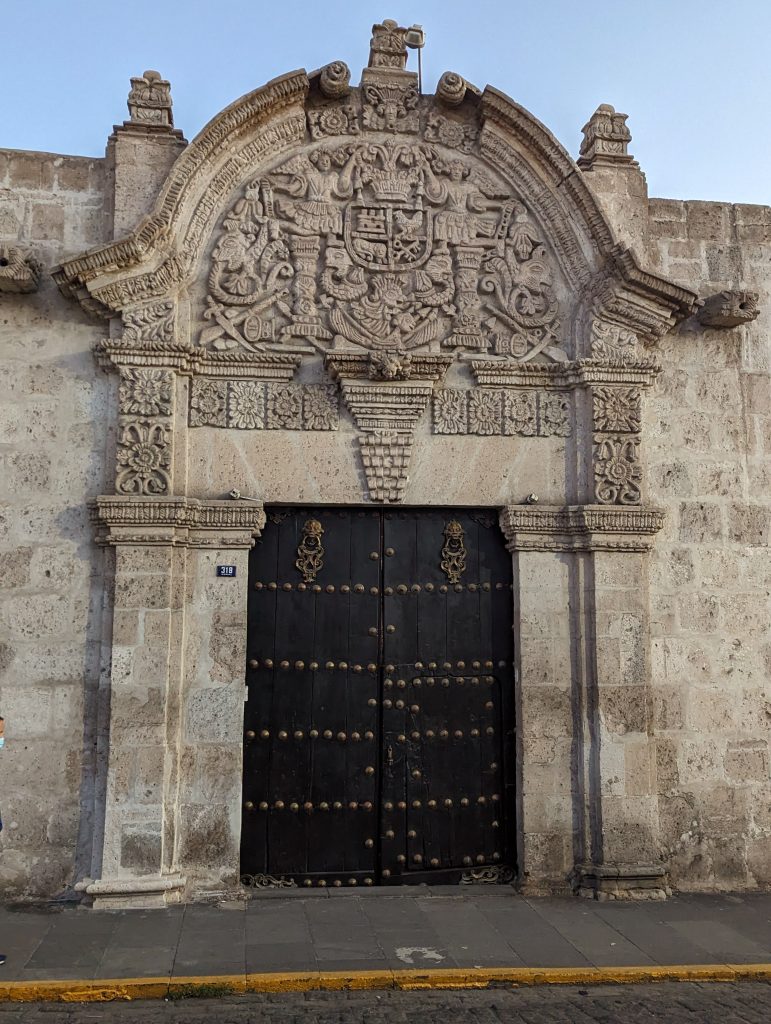
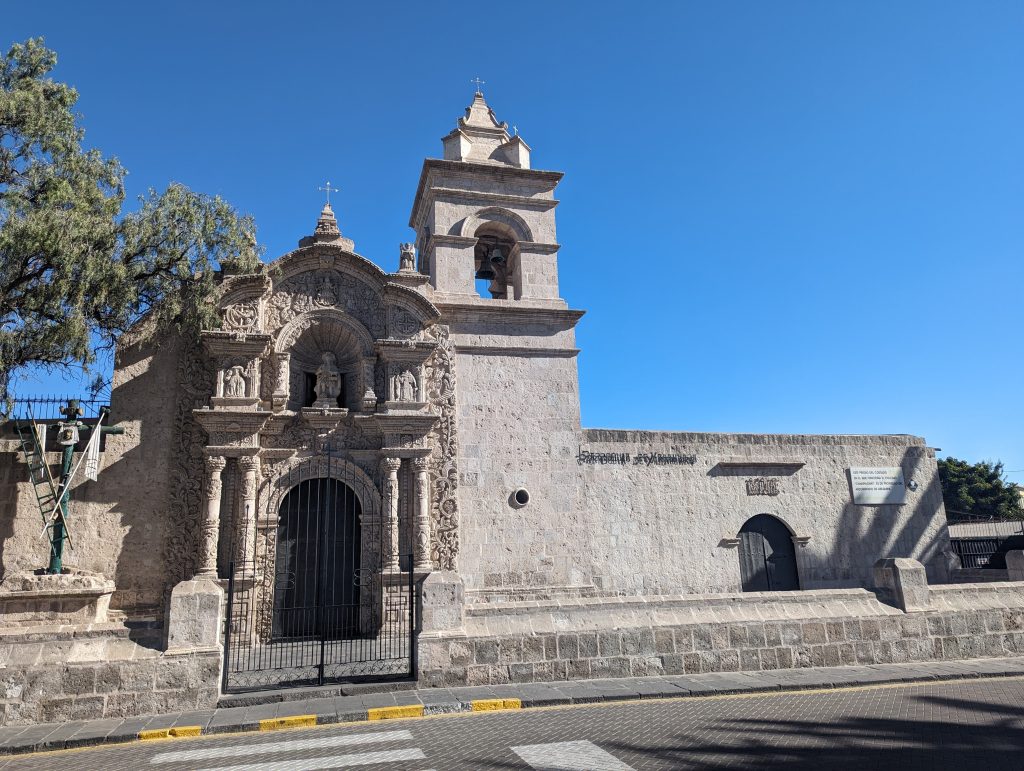
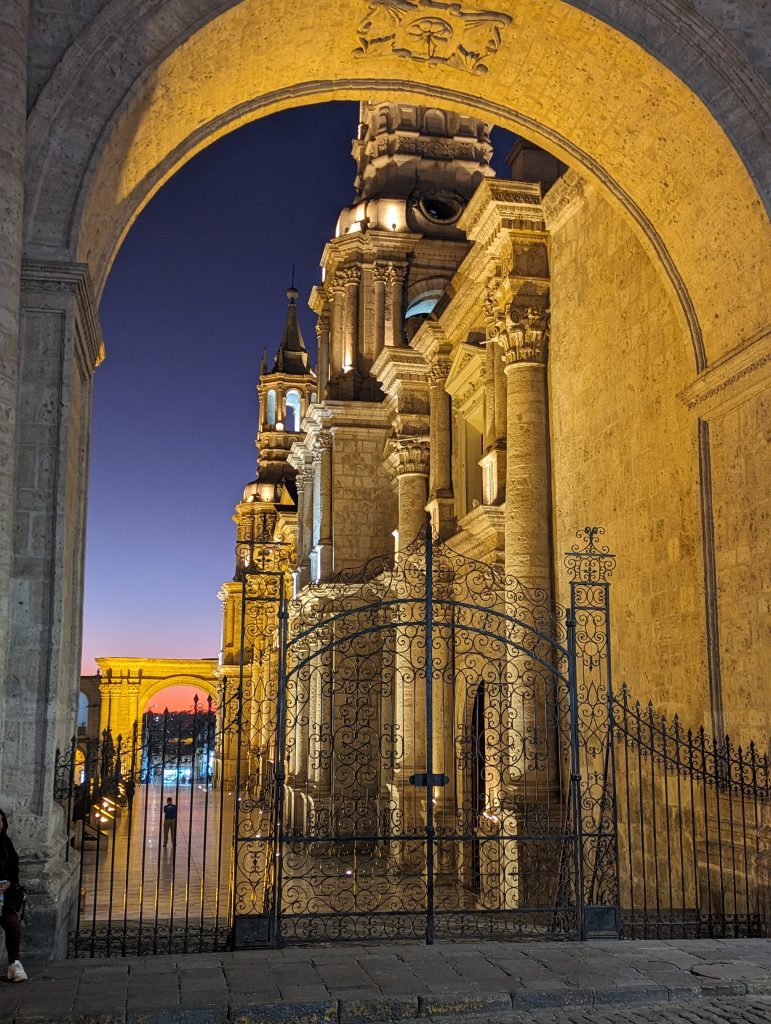
Like most cities in Latin America, Arequipa has a main plaza (often called Plaza de Armas), from which the city expands. The city’s downtown has several churches, monasteries and government buildings. A lot of these are white, preserving the color of the volcanic rocks that were used for their construction.
Arequipa is surrounded by volcanoes (the main ones are Misti, Cachani and Pichu Pichu). Over the course of millions of years, these volcanoes erupted and the lava formed a type of rock called “sillar”. The most common variation in Arequipa is white, although there is also a beautiful variation in a salmon color that is more difficult to use for construction purposes. Although the sillar was used prior to colonization, it was with the arrival of the European conquerors that it was more broadly employed as a primary construction material.
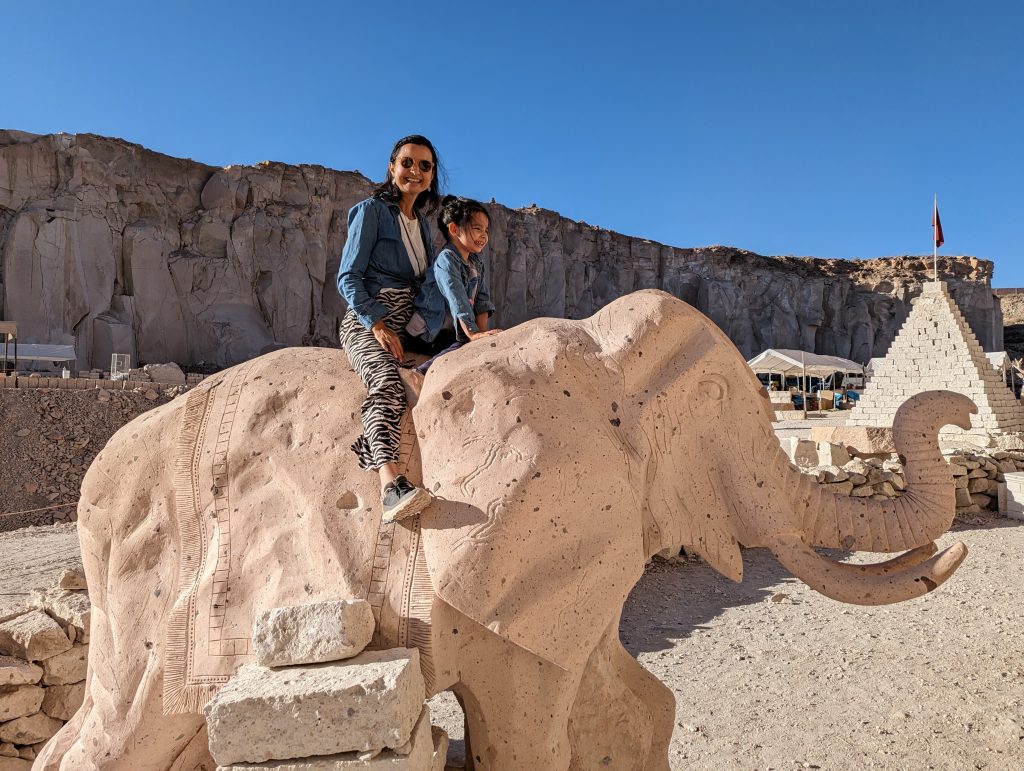
We visited one of the sillar quarries near Arequipa. The quarry is operational but a portion has been adapted for tourism purposes, and you can see plenty of sculptures made out of sillar.

Santa Catalina Monastery: Merging the beauty of sillar with the mysticism of cloisters
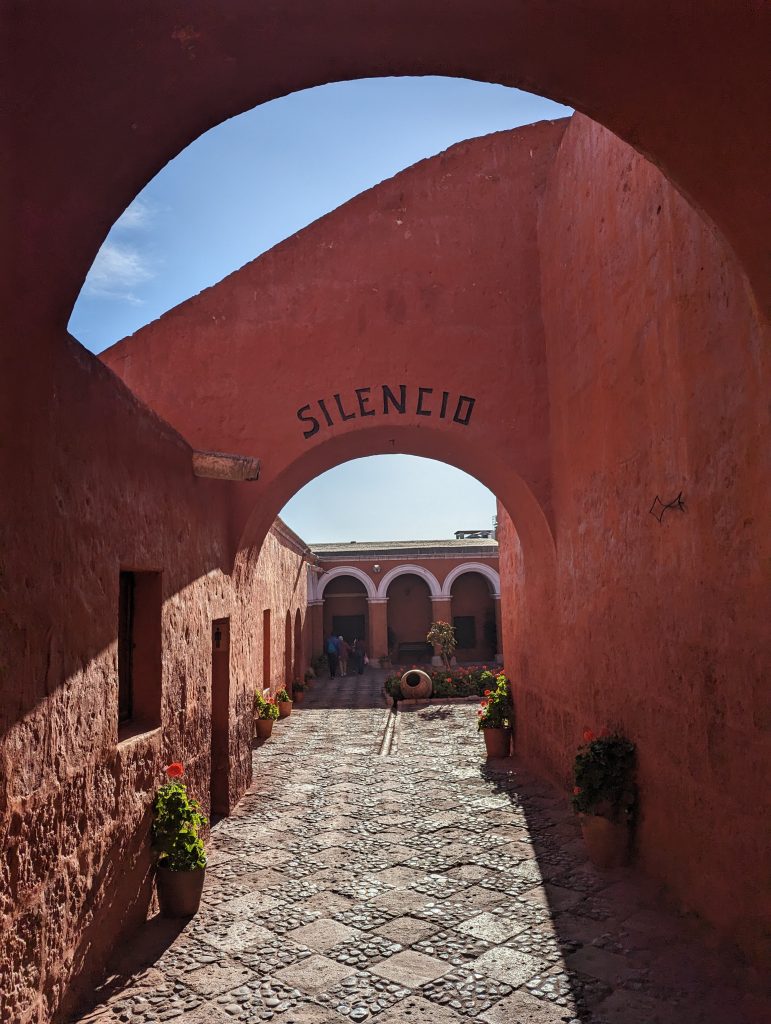
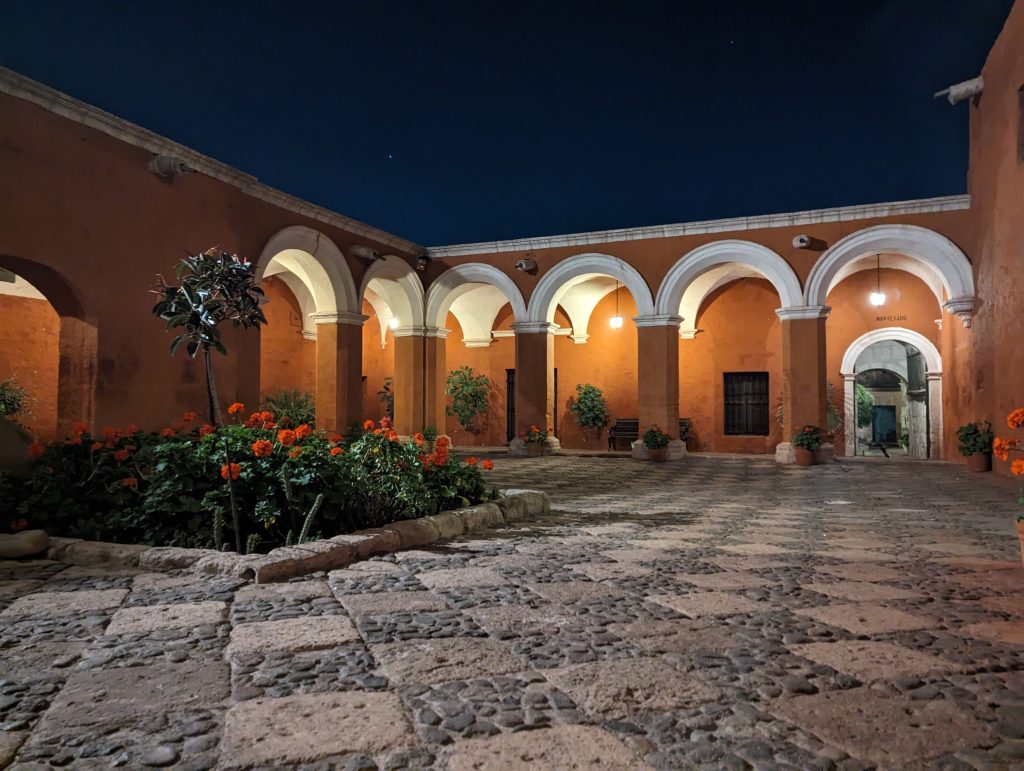
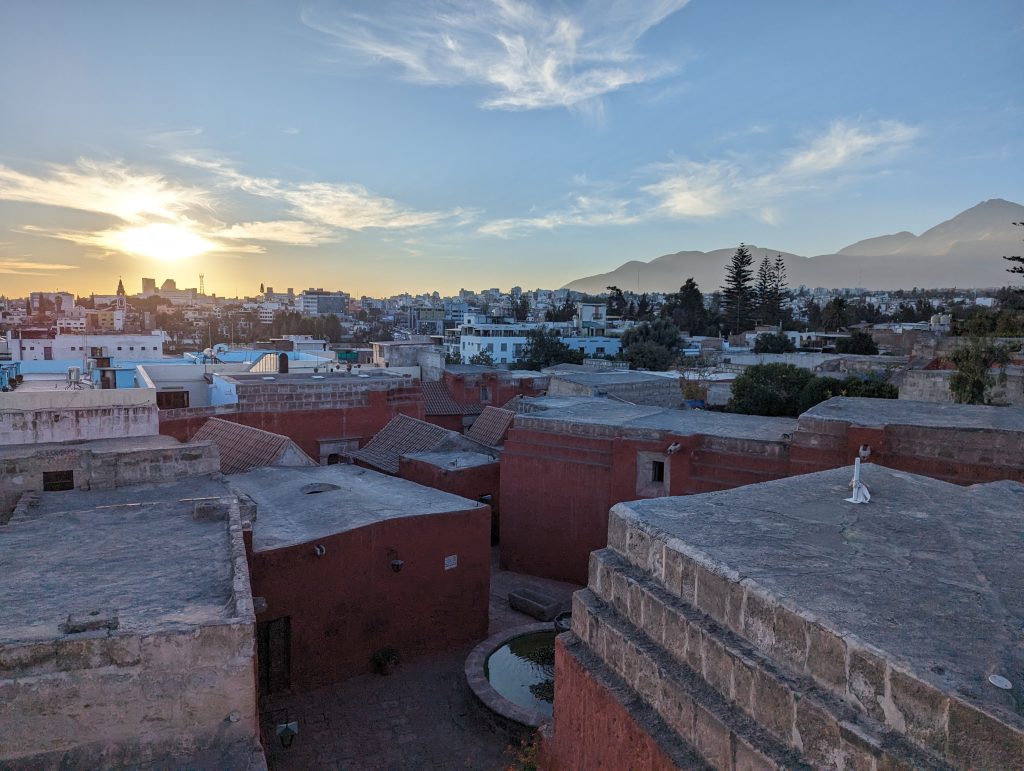
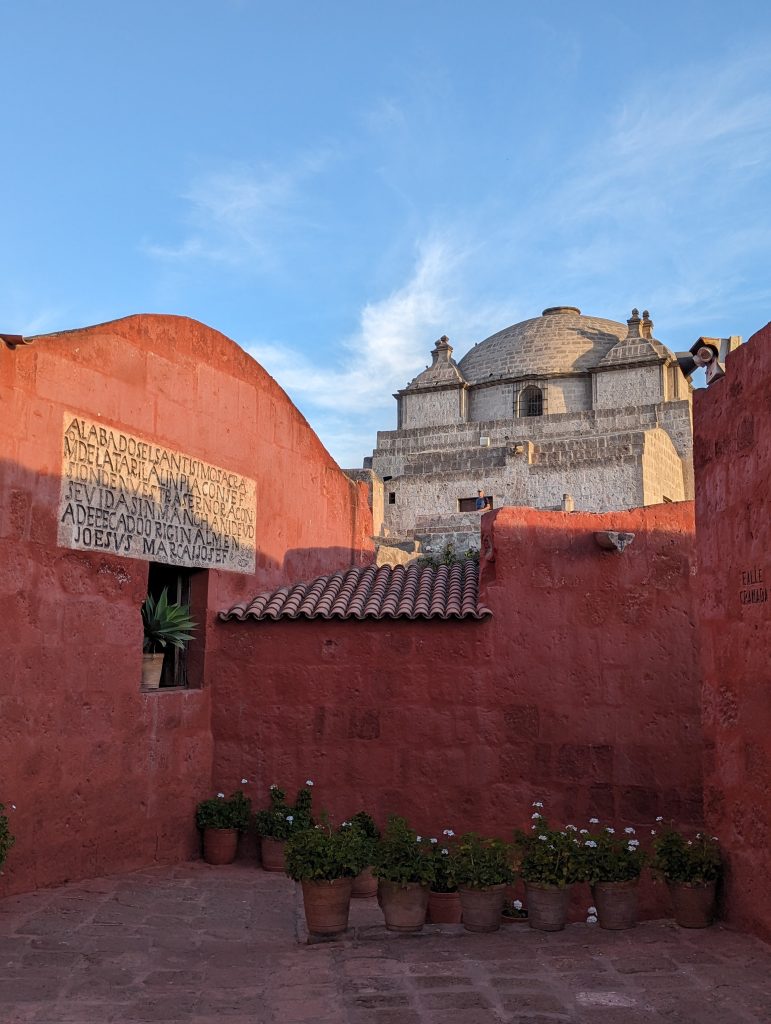
I’ve visited several churches and monasteries over the years. Nothing compares to the magnitude and beauty of Santa Catalina. It was founded in 1579 using sillar as the main construction component. What is unique about Santa Catalina is that for much of its existence each nun had its own living quarters (bedroom, living room and kitchen), making it a neighborhood in itself within the city of Arequipa. There have been several modifications over the years, mainly due to the impact of earthquakes, layering different architectural styles. The monastery remained closed to the public for about 400 years.

Monasterio y Museo de la Recoleta
This monastery-turned museum is a gem. It’s not just the items on display which make it interesting but also the sheer range of things you’ll find. This includes Amazonian fauna, haunting mummies, pre-Incan ceramics, antique toys, a beautiful library, access to the bell tower, a stamp collection, preservations of monastery living quarters, religious art, and beautiful courtyards.
Where did we stay?
We booked an apartment just outside the city center, in the Yanahuara district. An old facade made out of sillar opens up to a modern condo, just walking distance from the city’s downtown.
Travel considerations with kids
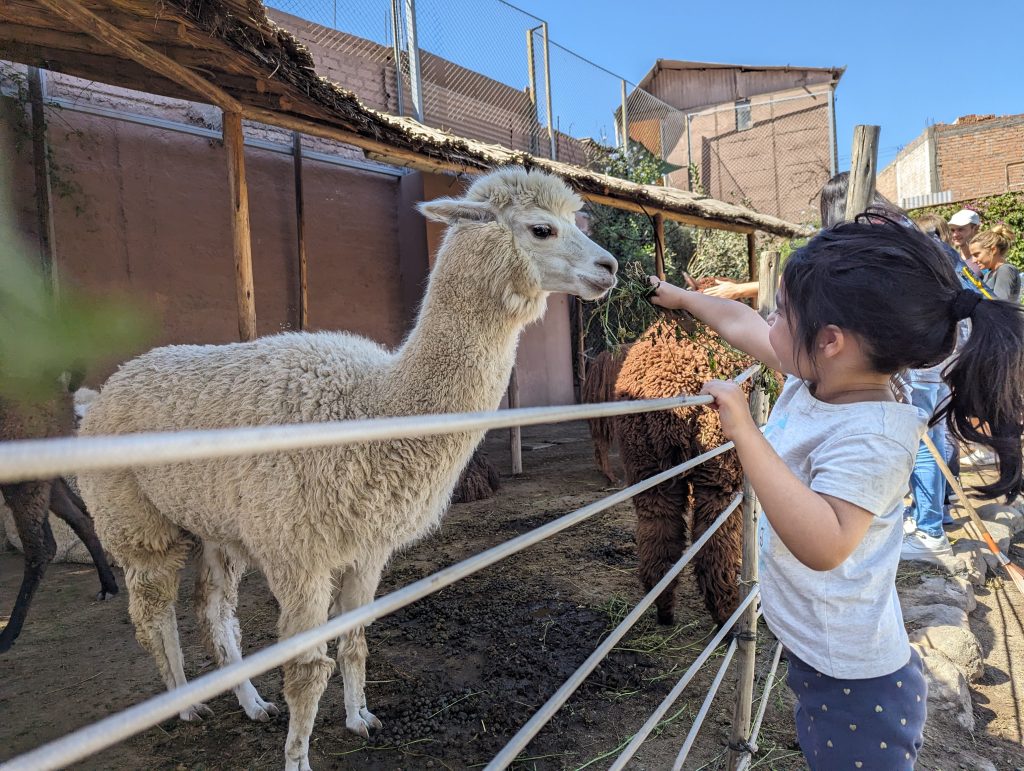
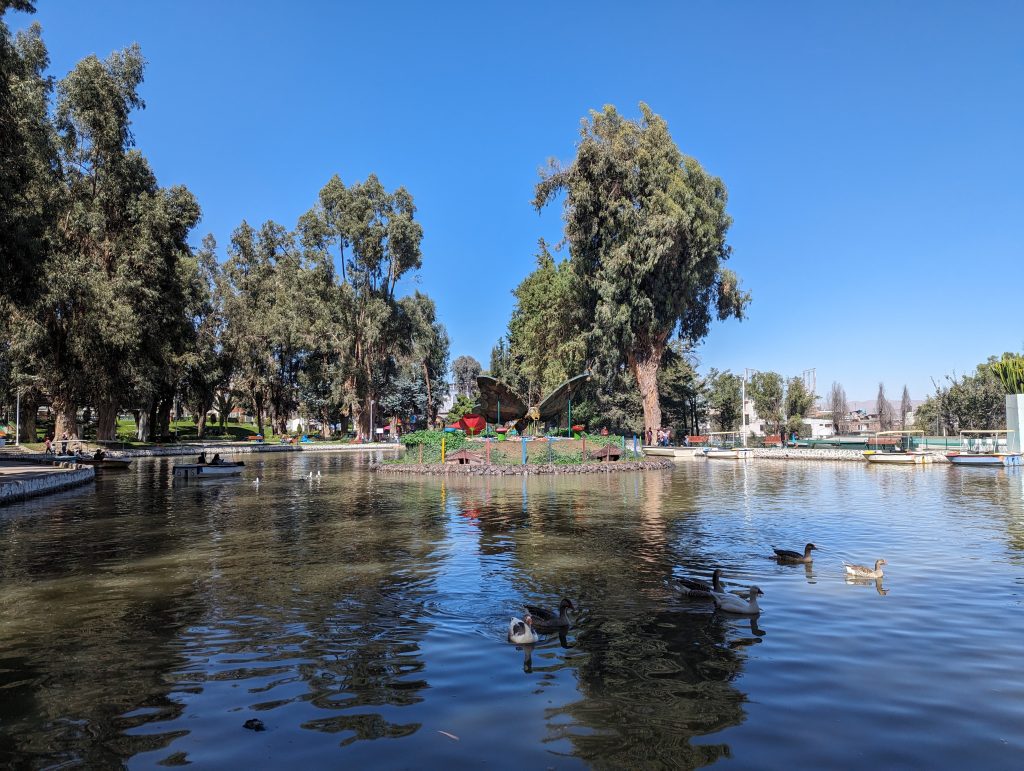
Although the city center is mainly touristic, we found enough activities to keep our daughter entertained during our one-week in Arequipa. We loved Kataplum, a big play space ideal for kids five and younger. It has a huge ball pool, a pirate ship, a play hospital, and several costumes for kids to use. Near there is Parque el Avion with some nice play equipment for young kids. In the city center you will find Mundo Alpaca which is a good quick stop with little ones as they have alpacas on site. This is close to Parque Angel Vinicio Conejo which is only open on weekeds and has a variety of games for kids of all ages.
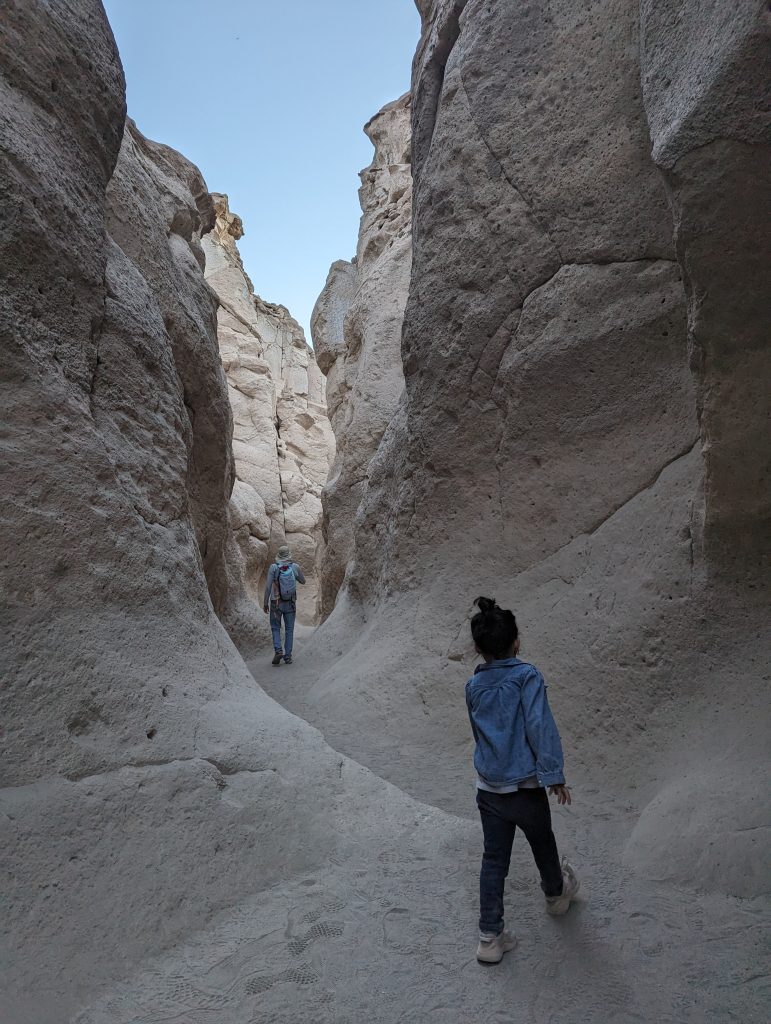
We also toured the “Ruta del Sillar”, which our daughter loved because of the many sculptures available (many of which you can sit on). It is near to Cañon Culebrillas, an easy and fun hike for little ones. You can buy the experience around Plaza de Armas, which will cost you a fraction of what you pay if you book online.
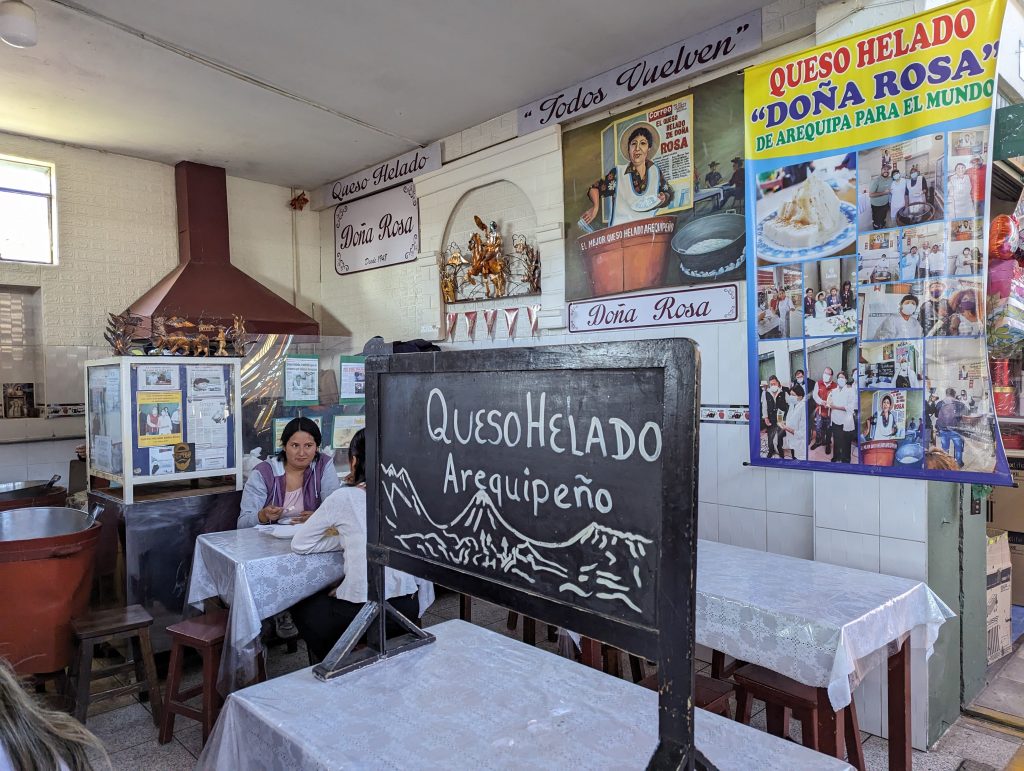
Foodwise, there is a lot of variety on Arequipa. From interantional cafes to street food, the city has you covered. We liked Bue Cafe as it has some of the regular international options as well as Peruvian cuisine. Zig Zag restaurant was also a highlight. A newer restaurant popular among locals, which has a nice outdoor space and play equipment for kids is La Huerta del Loncco. And, if you feel tempted to try queso helado, do yourself a favor and visit Doña Rosa on the second floor of Mercado San Camilo. That’s as local as you can get!
Arequipa in a Nutshell:
Population: 1 Million
Usual Price for an Airbnb: $50-$100 USD
What we liked most: The dry weather with pleasant temperatures, the architecture and the delicious food available
What was challenging: Once you go out of the city center there aren’t many things to do. And we found the traffic in Arequipa to be nuts, so we mainly spent our week in the city downtown.