
Family of Five Shares Insights from a South American Gap Year
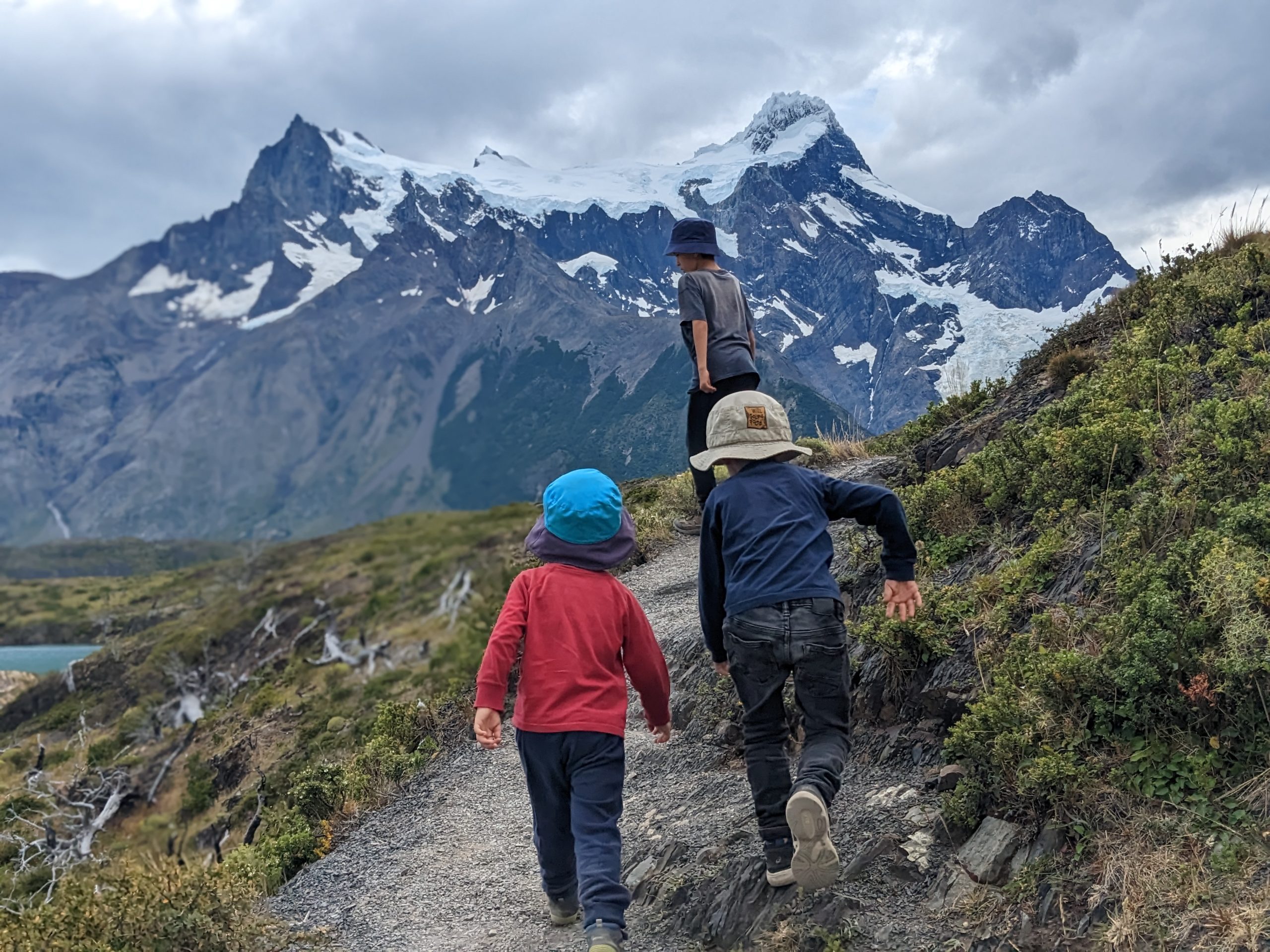
Matt and Liuan of the website and Substack publication Slow Camino live in the Chicago area with their three energetic young boys. Matt is a software developer and a hobby blogger. Liuan is a professional writer, journalist, and author. They recently took their first family gap year, slow-traveling the South American continent and shared some of their insights in an interview with Hello Gap Year.
Hello Gap Year: What were your lives like when the idea of taking a gap year first occurred to you?
Slow Camino: We were raising babies and toddlers, fixing up a house, and full throttle on our careers. Insomnia and anxiety were eating me (Matt) alive. Liuan was running ragged from waking up multiple times a night to feed babies and deal with sick kids. Our cup overfloweth, but not in a good way. In other words, we were just typical suburban thirty-somethings.
We always loved to travel. But at that point in our lives, leaving it all behind for an indeterminate amount of time seemed almost like dying and going to heaven.
Hello Gap Year: What were the first mental roadblocks or doubts you had about the gap year dream? How did you overcome them?
Slow Camino: Well, we had that house we had just fixed up. We dreamed of finding some ideal place with no winter to start a new life, but we weren’t thrilled with the idea of selling our home right away. On the other hand, leaving it empty for that long seemed too risky. We considered long-term renters but didn’t like the inflexibility of having people living in our house when we might want to go home early or stop in during a holiday to see family. So we weren’t sure what to do until some friends of ours handed us the missing puzzle piece. They suggested we rent it out on Airbnb.
We still had years before we planned to take our gap year, so we put the idea to the test. We got it set up and hosted guests when we took our two-week vacations. We got bookings. Income exceeded expenses. It worked!
To a lesser extent, we worried about financially setting ourselves back to square one. But in the end, we just decided that was a risk worth taking. Silenzio Bruno!*
*From Disney’s “Luca,” in case you didn’t already know.

HGY: This wasn’t a whim but entailed years of planning. Having a third child and also the coming of the pandemic shaped your plans. What else changed or evolved between the first spark of an idea and when your gap year began?
SC: Our original conception of our gap year was to travel all over the world. We were thinking six months in Asia, six months in South America, and if we were still going strong—which of course we would be—visit all the other continents.
But many of the Asian countries we planned to visit took longer to lift COVID restrictions. So we bought one-way tickets to Rio de Janeiro. From there, we’d play it by ear.
As we started fleshing out the first few months, our values came more into focus. We realized we’d rather stay for longer, make connections, and really get to know the places we visited. Ping-ponging around the globe sounded cool, but it wasn’t us. So that’s how Traveling the World narrowed in scope to Traveling South America.
HGY: How did you explain your gap year plans to other people before you left? Has the way you talk about your gap year changed much now that you’re on the other side of it?
SC: Before we left, I sometimes felt I had to defend it and give assurances. No, it might actually benefit the kids to skip a year of school. My career and retirement savings will be fine. The people renting our home won’t trash and plunder it. Even though I laid awake at three in the morning worrying about those very things.
Since none of those fears came to pass, there is no more reason for people to worry about us. So now we just talk about our adventures and takeaways, and try to answer impossible questions like, “What was your favorite place?”
HGY: Is there anything you feel people sometimes misunderstand about your gap year intentions, which you’d want to clarify?
SC: When we told people that we were taking our three boys and a few backpacks and wandering around parts of the world that only make the news when bad stuff happens, they seemed to think we were at best fearless ascetics and at worst reckless masochists. If people knew the truth, we are more on the risk-averse hedonist end of the spectrum. The break from stress and obligation, the pleasures of food, the outdoors, and even the simplicity of tending to a single backpack of possessions were joys with little downside.
There are also some that see a white(ish) family traveling to Latin America and think social worker or missionary. We had no illusions of saving anybody or showing ’em how it’s done. We did try to contribute and be useful as best we could when we were guests or volunteers. But our main purpose was to see, learn and enjoy life.
HGY: Anything you’d do differently if you could take a gap year again?
I think we would spend more time in fewer places. Reduce the number of border crossings. Try to get the kids plugged into a school or community where they can make friends.
SC: Were there any particularly useful resources you relied on as you planned your gap year?
Travel planning takes a shocking amount of effort and organization. Our document-based itineraries, lists and random things-to-remember got unwieldy fast. Though it’s not typically thought of as a travel planning app, we converged on Google Calendar as our go-to itinerary organizer. We color-coded it so that orange was the general place we planned to be in. Green was for lodging. Grape was for transit. Red, activities. And so on. We stored all the relevant information—addresses, instructions, confirmation codes, links, notes—in the event details. It made it easy to look at the big picture (where do we want to be in two months), but also zoom in and find our Airbnb listing link or bus departure time for that day.
Another website we always seemed to be on was www.rome2rio.com. I wouldn’t take those results as gospel, but I found the transit options, prices, and time estimates invaluable for charting a viable path.
And lastly, if you’re trying to fly less and didn’t bring your own wheels, www.busbud.com is extremely handy for long haul trips.
HGY: Do you have a go-to piece of advice for a family or mid-career professional considering a gap year?
SC: Be careful to distinguish between your own values and the imagined voices of others in your head. Don’t let the demands of Instagram, your parents, the Jones’s, or the recommendations in some travel blog dictate your journey. Keep to your own budget, follow your own instincts, and chart your own path.
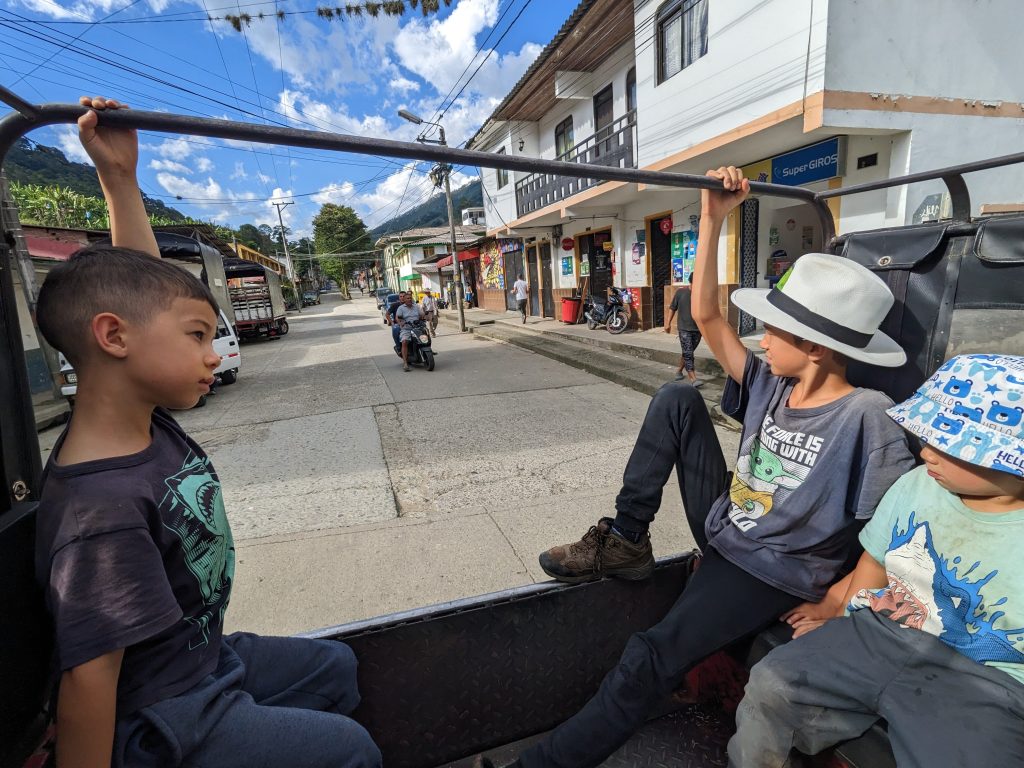
HGY: What do you feel have been the most unexpected rewards or benefits of taking a gap year?
SC: I didn’t expect we’d just pick back up where we left off in our old lives. Not the sexiest conclusion to a gap year, for sure. But in several key ways, it works better for us now. Rather than going back to work full time, I was able to negotiate more contracting hours. Now I work three days a week doing the creative parts of my job I like most. That gives us more time to take on other creative personal projects (like the children’s book we’re writing and illustrating about our gap year). It also allows us to travel for longer periods and get enough rest to avoid burnout.
Overall, we came back less anxious about money and career advancement. We’ve gotten better at balancing our obligations to others and tending our own gardens, so to speak. Even just deciding to take a gap year put things in better perspective and allowed me to relax a little about my career and future.
It also showed us that every place, no matter how exotic or stunning or seemingly ideal, becomes mundane if you stay there long enough. We don’t pine for greener grass quite as much as we once did, though we still daydream a bit. The main thing is that we’ve gotten over feeling like we’re missing out on a better life somewhere else.