
Learning the Huilloc Community Way of Life

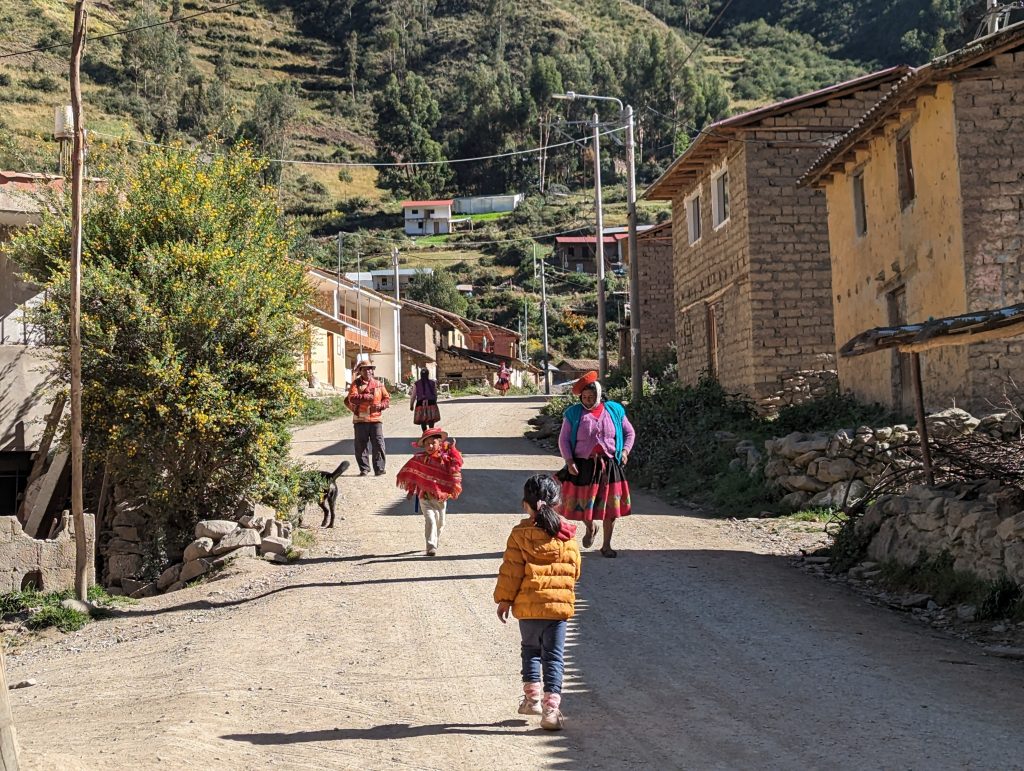
Anyone who has been in Ollantaytambo or Cusco has probably seen someone from the Huilloc community. Their colorful dresses are hard to ignore. Many tourists snap a picture or watch them as they pass by. The visual aspects of the Huilloc identity come out so strongly that it’s easy to see them as “others.” In reality they are just like any other human being but with a strong sense of community, an inmense respect for our planet, and pride in their origins and traditions.
The Huillocs are known to be a surviving Inca community. They preserve the traditions of their ancestors in their agricultural methods, ritual practices and art work. They practice community work for tasks such as construction or agriculture. For the most part they are self-sufficient as they grow most of the food they consume. As of 2024, the community is composed of around 1,000 people, and it hosts an elementary and a middle-high school.
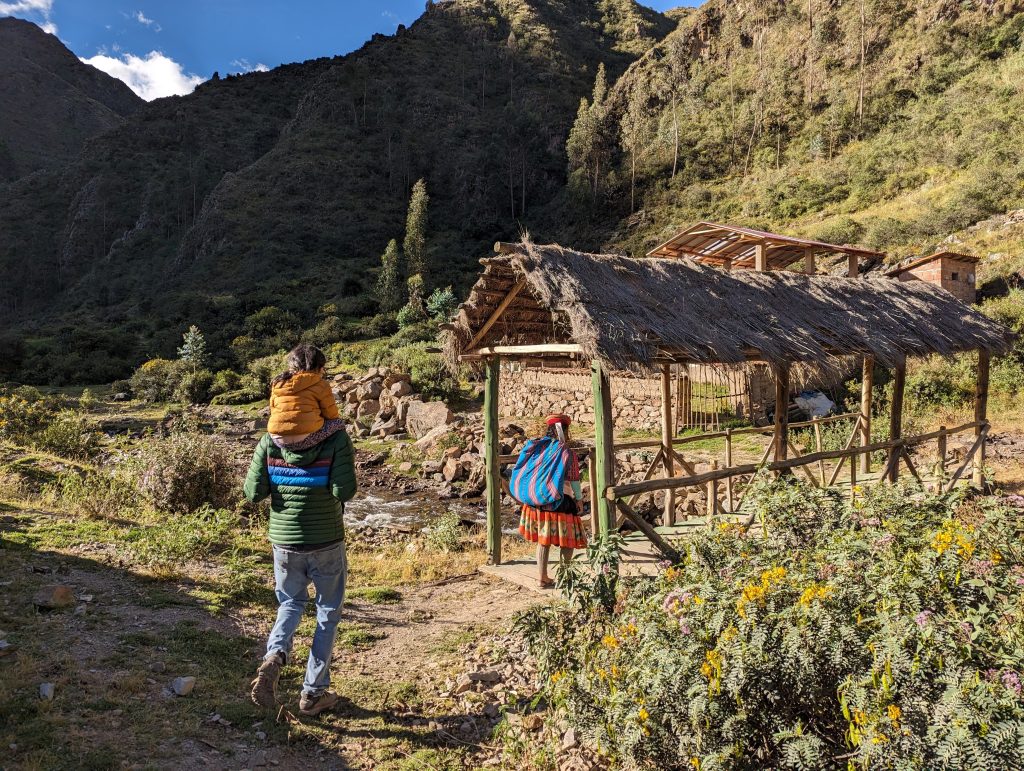
While staying in Ollantaytambo, we spent a night with a Huilloc family to learn a bit about their way of life. What an honor! On a regular day everyone wakes up early and have a big breakfast. Kids are taken to school, and then everyone is off to do their chores. Working on the farm, making textiles, cooking, taking care of tourists. Everyone seems busy, and joyful. They make jokes, they laugh a lot. Kids play on the main street at the end of the day.
We received so much care and learned so much in that short period that it’s difficult to capture in a short blogpost. Anyone staying in the area should take time to understand the human beings behind the colorful attire.
How has the community organized around tourism?
A leader in the community, Tomás Quispe, envisioned tourism as a way to provide additional income to the community. He, along with his wife Virginia and the entire community have been working since 2010 to incorporate tourism into their activities, and to share their culture with visitors. There are now 30 host families who have been trained in hospitality and cuisine and who open their houses to visitors.
Their hosting system is simple, yet powerful. They are all trained to provide the best service they can, they take turns in hosting, and they don’t compete among themselves.
Part of sharing their culture involves having a set of structured activities for guests. Some of those activities include working in their farms, visiting children in the local school, learning weaving, sharing ancestral cooking methods, making a pilmigrage to pay tribute to Pachamama (mother earth), helping widows and single moms with difficult tasks such as chopping or carrying wood. All those are activities are normally performed by the community, and they involve the visitors to help or learn from them.
Weaving: An ancient art
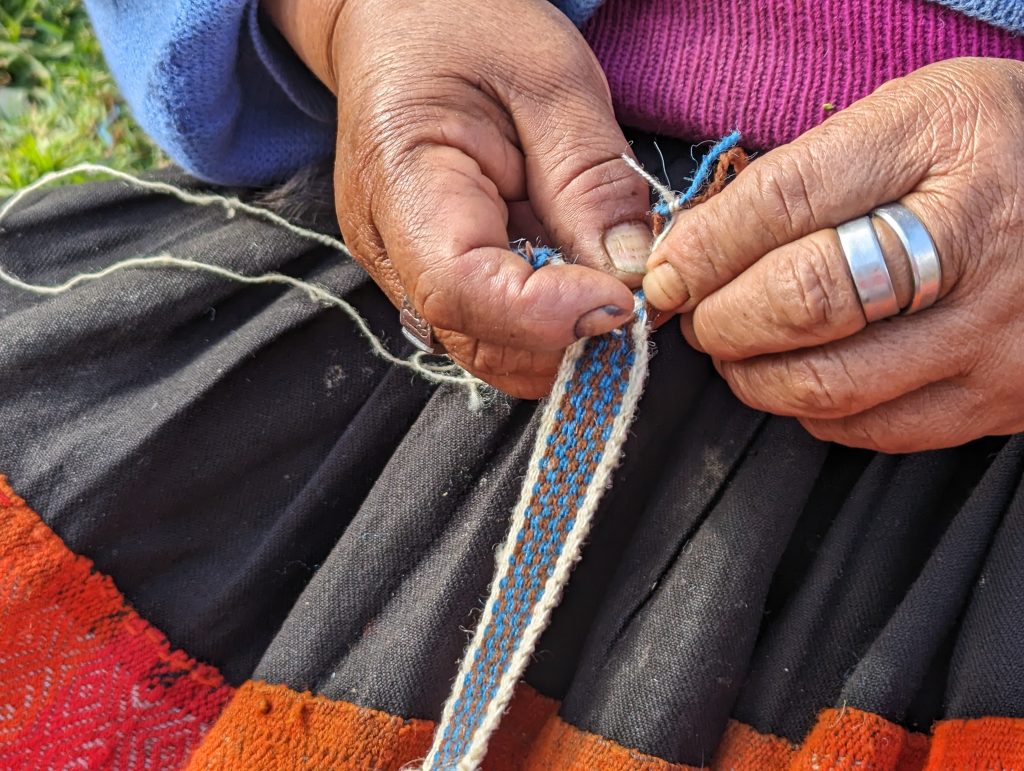
The Huilloc community is known for their textiles. It is common to see women spinning wool as they walk through the village, or sitting in their yard while weaving. Their textiles are of high quality since they use alpaca or sheep wool dyed with natural colors. The whole process is completed by hand.
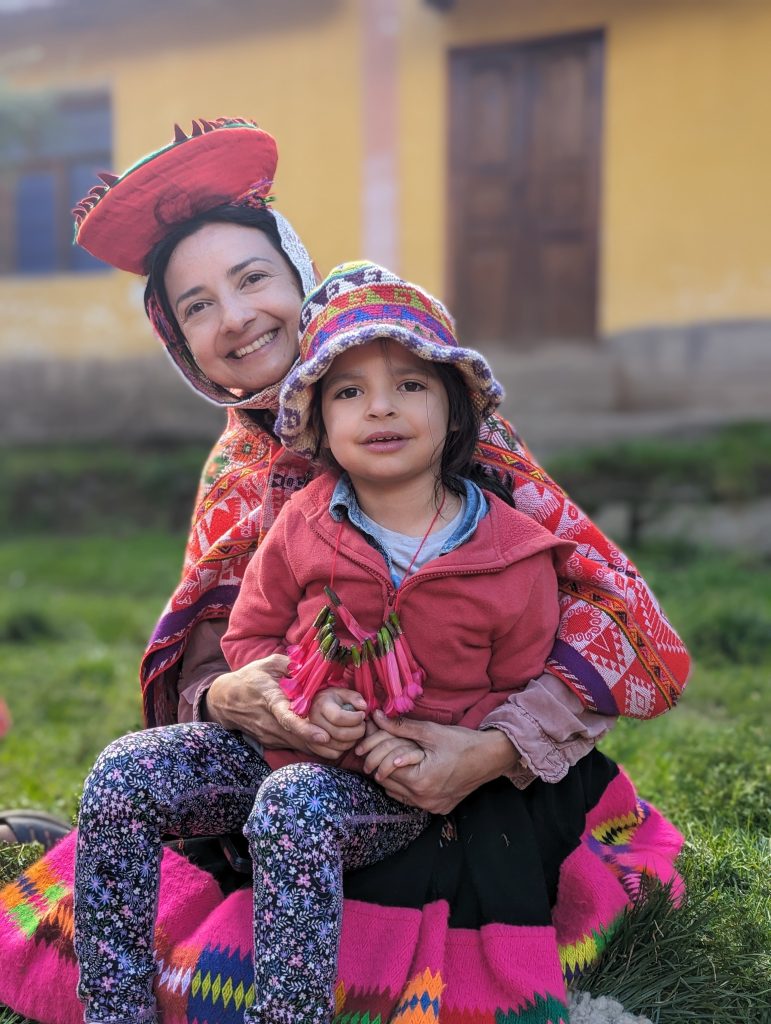
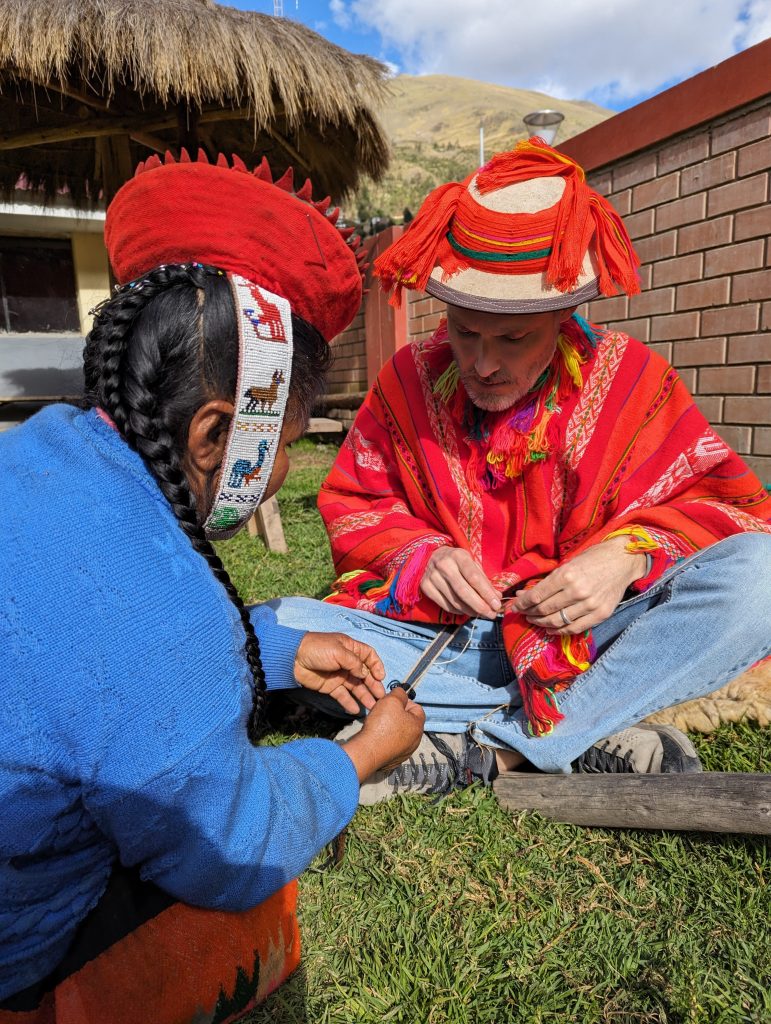
We had a short demonstration on weaving and as we suspected it is not as easy as they make it look. Just try to sit on the ground for hours while also quickly coordinating your hands to make intricate patterns by memory. The experience has made us more highly value the art when we see it. We also tried wearing some of the traditional clothing. To my surprise, the dresses are comfortable, and also protect well from the weather at the high altitude. After wearing these clothes, I realized that they make a lot of sense!
What is staying with a Huilloc Family like?
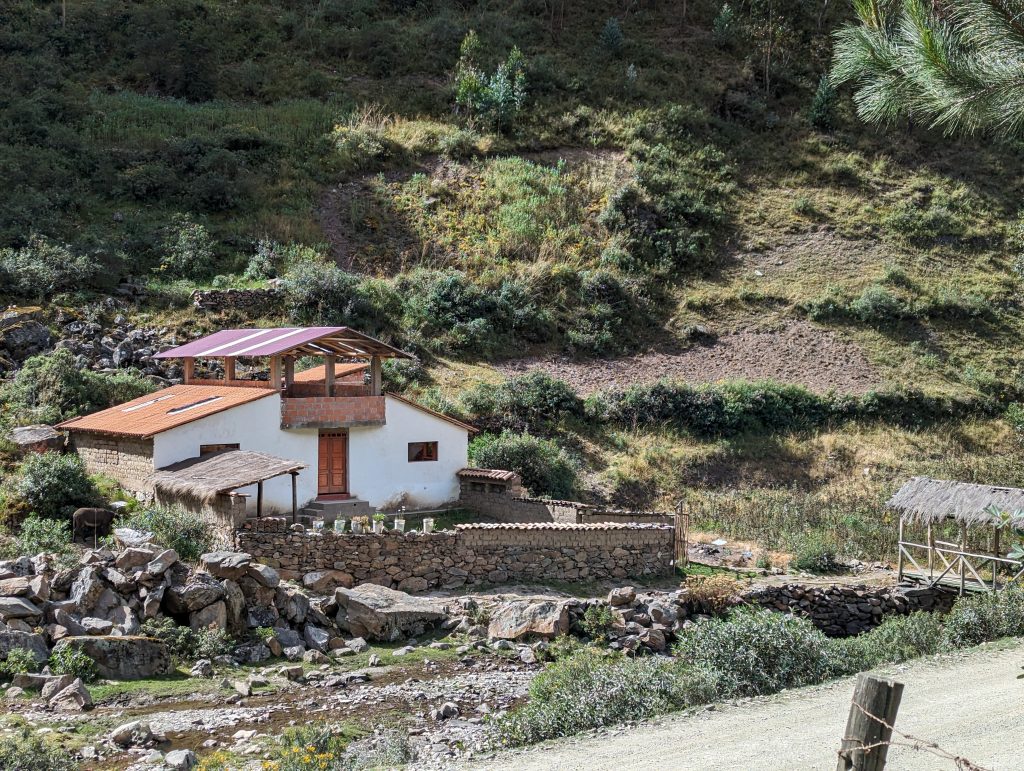
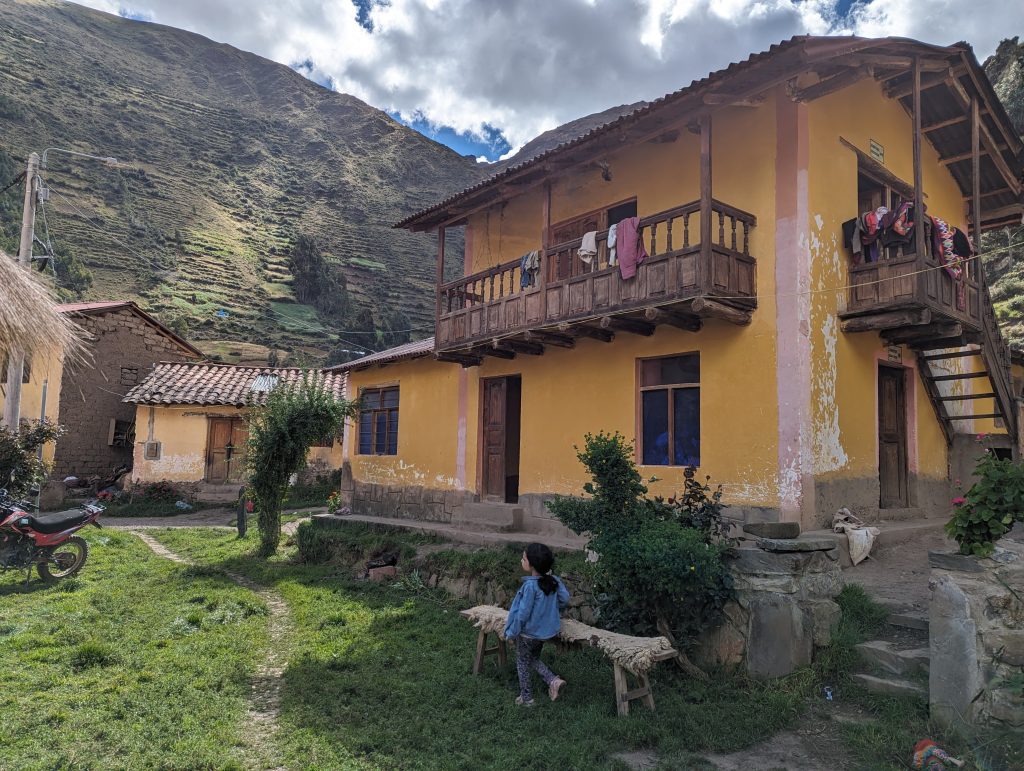
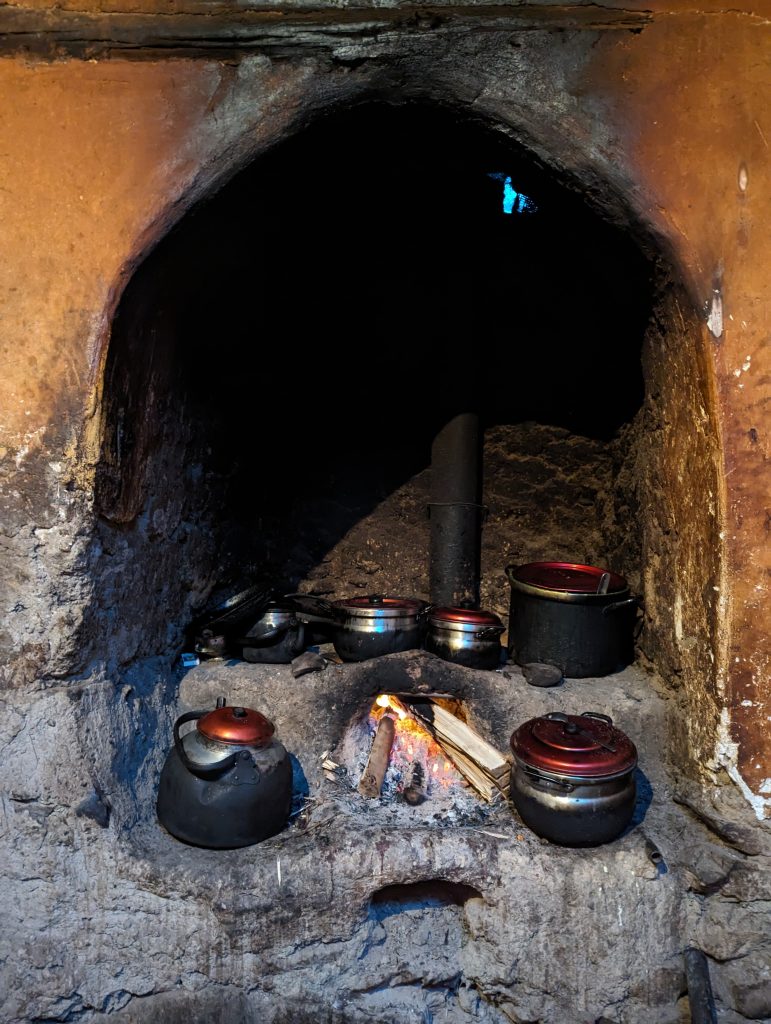
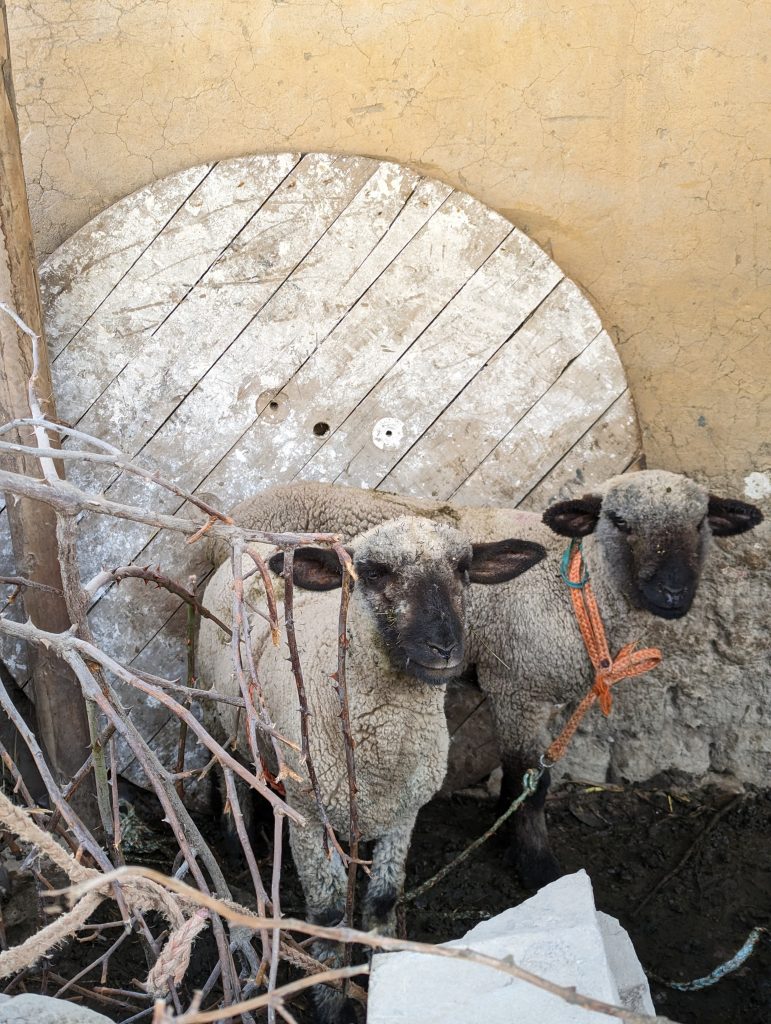
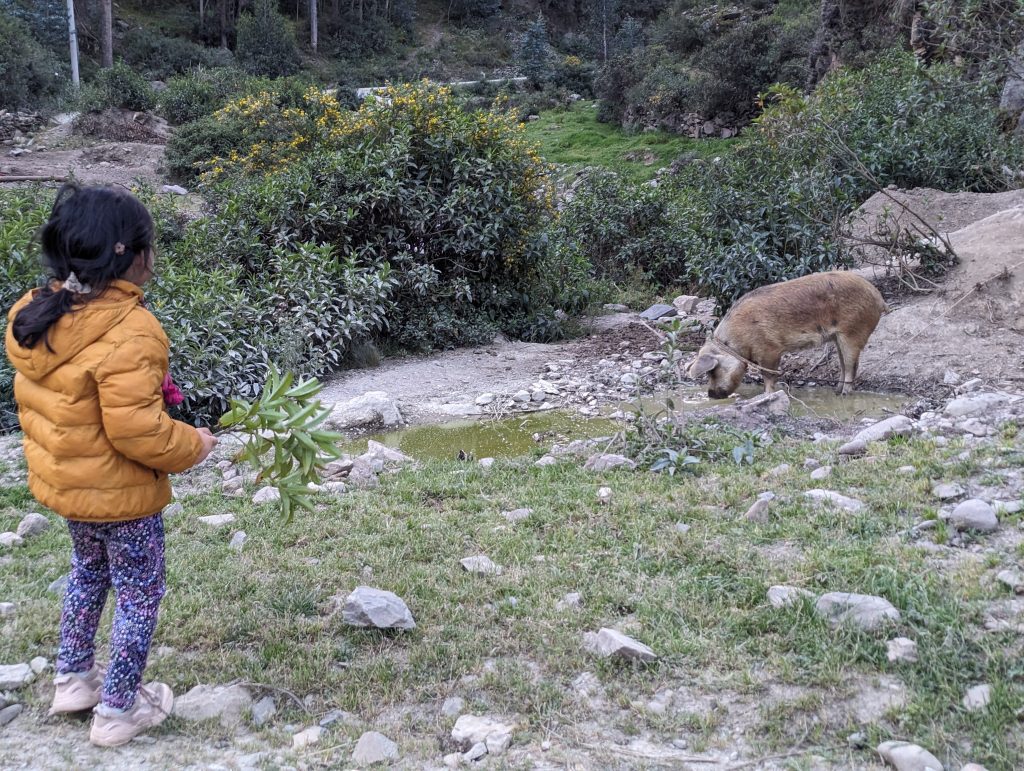
The community is located in a rural area in the Sacred Valley. Their houses are modest, yet with the basic amenities. Families might have chickens, guinea pigs, pigs, dogs, or sheep in their plot. They provide all meals – farm to table.
Our bedroom was a detached room made out of adobe and with rustic concrete floor. It was decorated with local textiles, and fresh eucalyptus was arranged all around. There was something about it that made it almost magical!
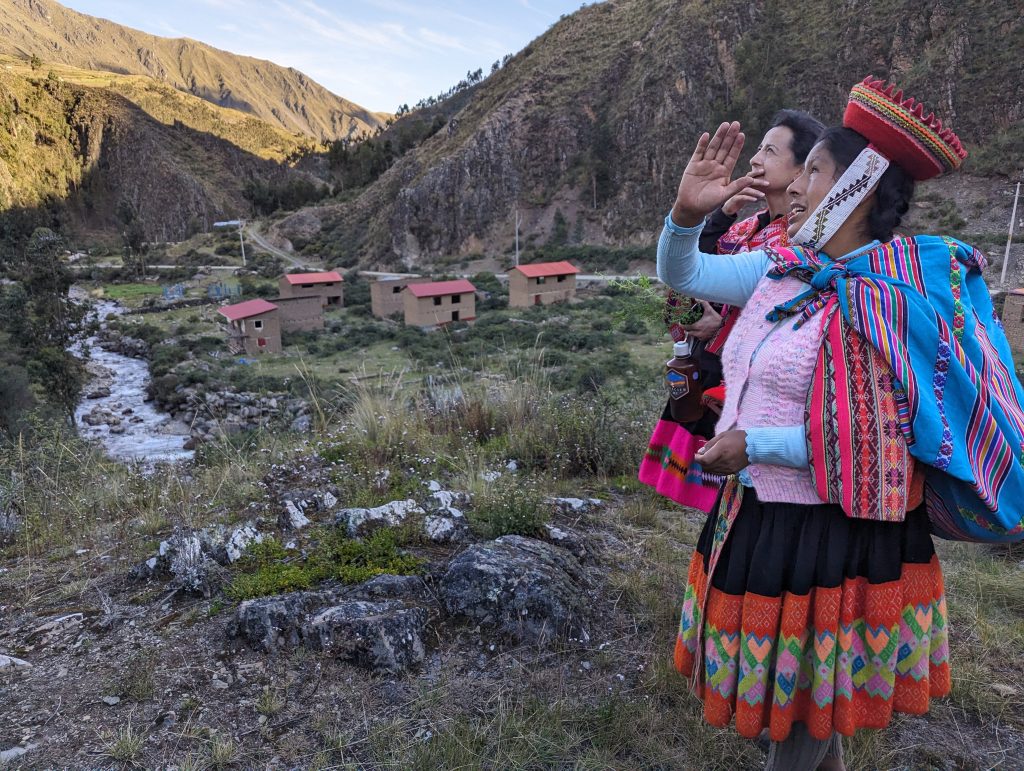
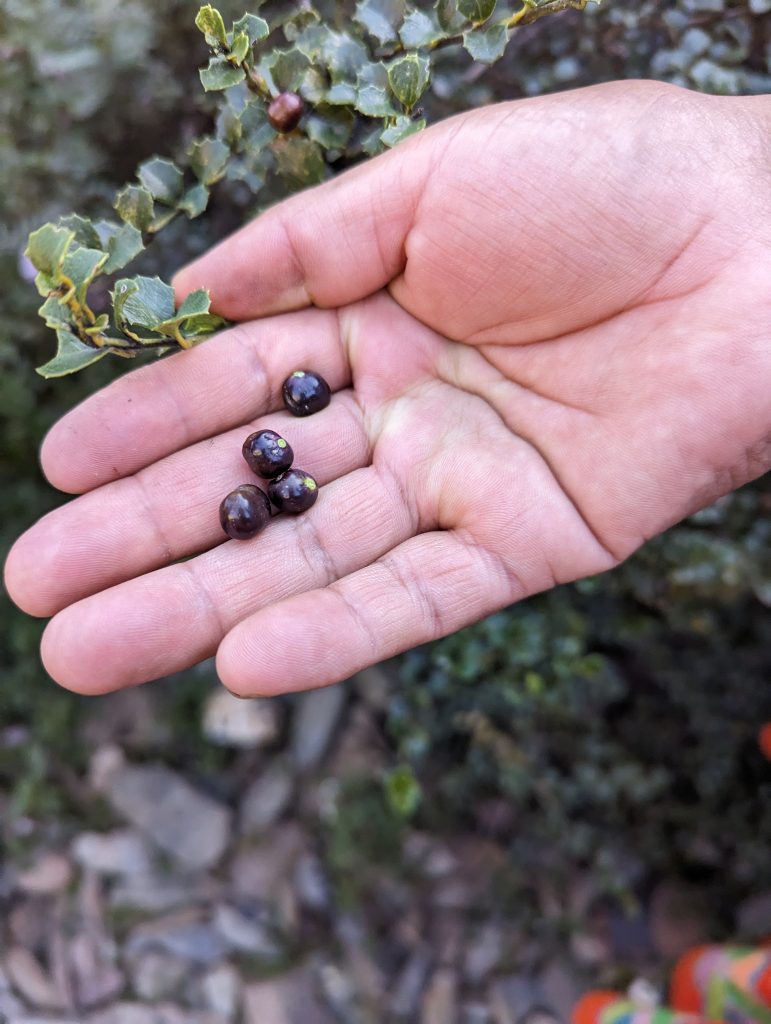
Activities depend on personal interests. We learned the weaving process, and took a walk in the mountains with Virginia, who showed us the plants and flowers used to make dye for wool. There is plenty to do there if you don’t mind getting your hands dirty!


How to get to the Huilloc Community?
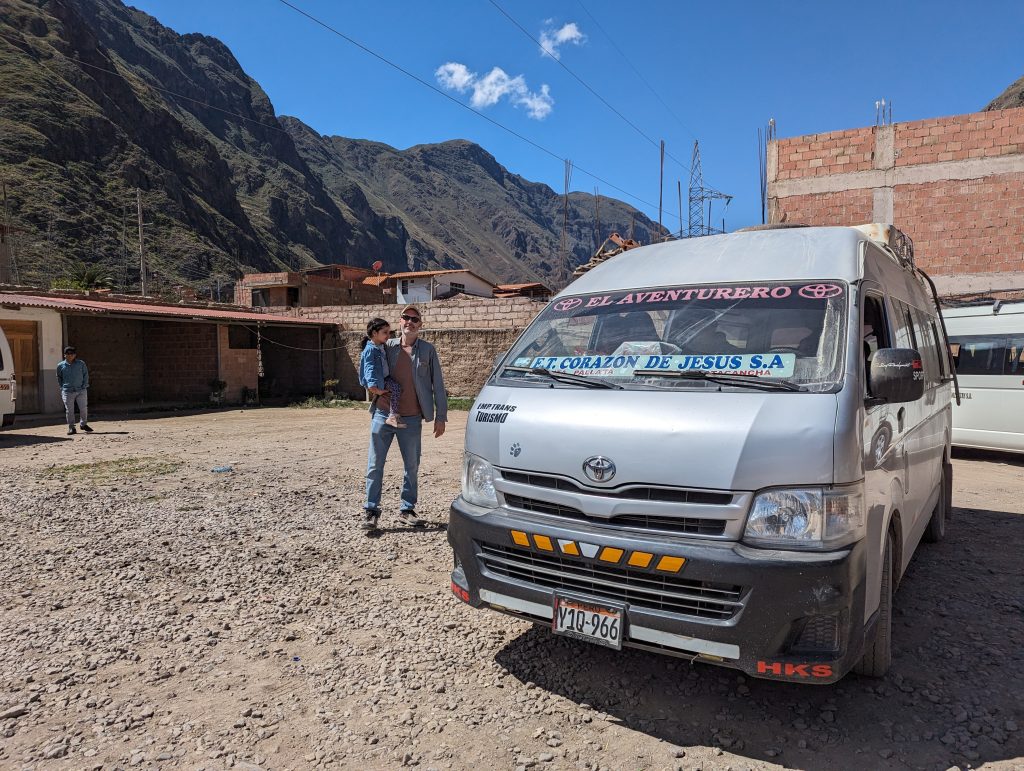
The Huilloc community is located about 12 kilometers from Ollantaytambo in the Sacred Valley, and about 3,400 meters above sea level. We took one of the vans that locals use from the town’s terminal. The ride there is beautiful, the road goes through the mountains and along the Patachacha river. Although it’s a short distance, the road is narrow and it took us about an hour to get to the community.
Sweet story about our arrival: We were dropped off near a school in the middle of the village. Virginia (whom we didn’t know yet) was waving at us. She was wearing the traditional dress (which is used every day), and a big smile. Virginia in her soft voice led us to a courtyard, and her mother in-law set some sheep skin rugs on the benches. We were asked to take a seat, and they gave us a a necklace made of “canto” flowers, which women in the community use to say “welcome.” It was a moving experience.
What is the food like at the Huilloc Community?
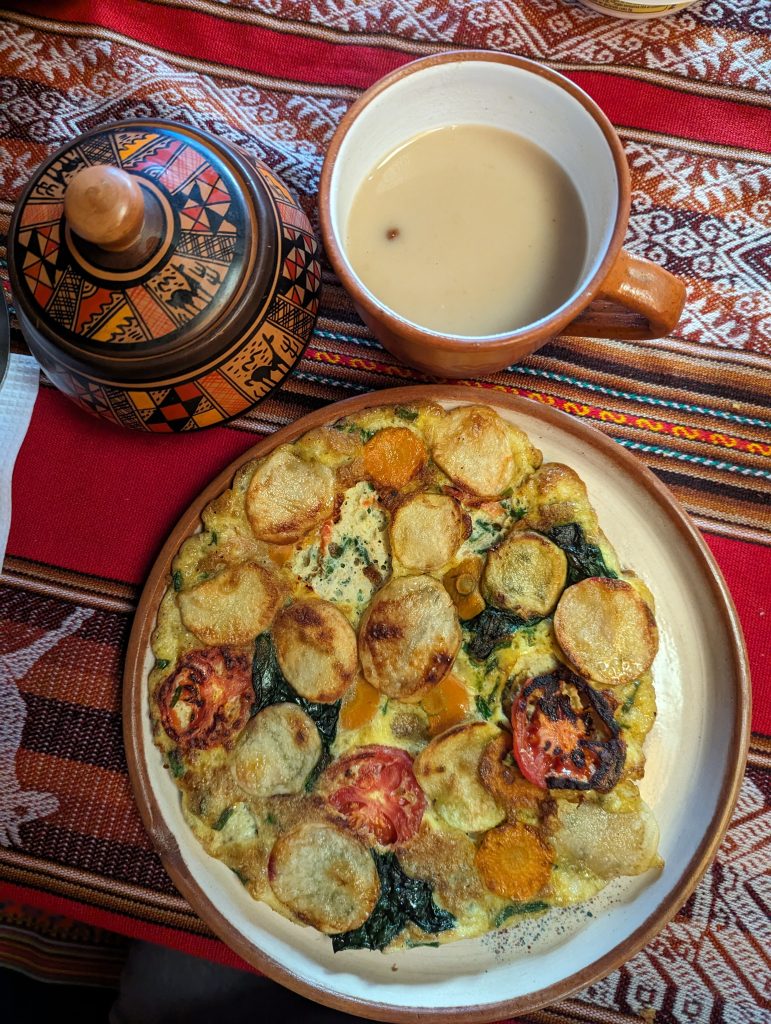
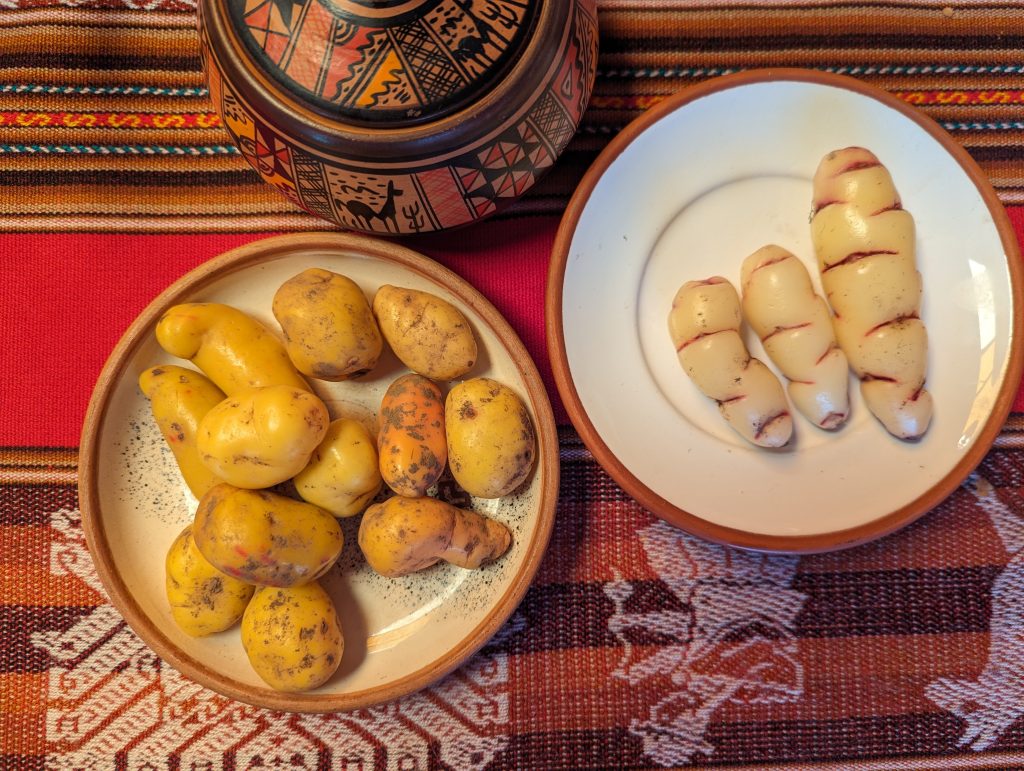
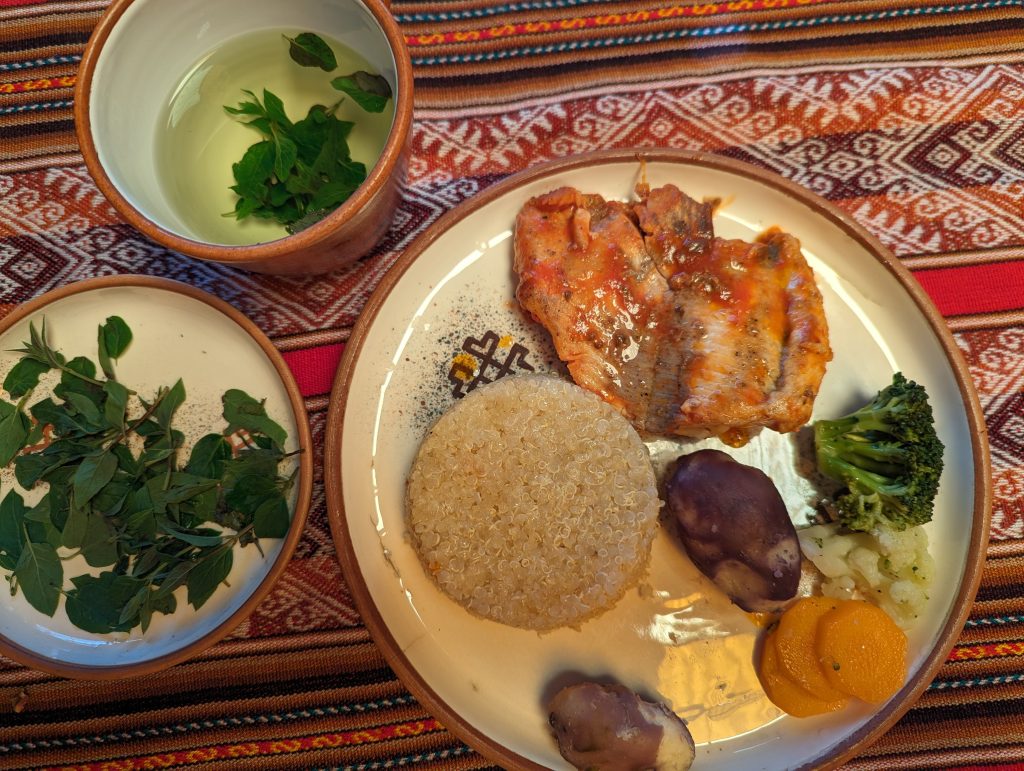
Most of the food that is consumed is produced by the community. There are some items they can’t produce such as rice or oil, which they get in the market. For the most part, their produce is organic. It’s common to have soup, preparations wih alpaca, chickens or trout, as well as herbal tea. Everything tasted fresh and delicious!
What is there to do for young kids?
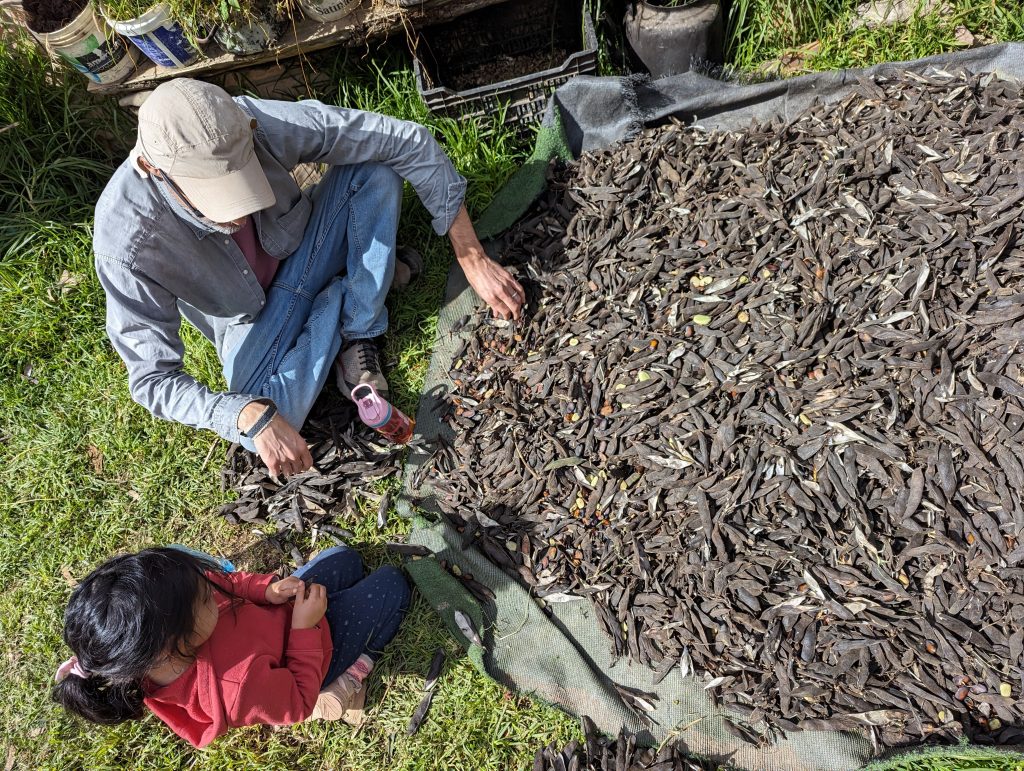
Plenty! Walk around and observe or feed the animals. The most amazing thing is that kids are often just happy to play with each other, and there are always a few kids around! There is also a lot of learning about where food and clothes come from and the hard work it takes to produce them. This is a highly recommended place for young ones!
What did we like about the visit?
Everything. So much learning about the Huilloc Community way of life! The community is an example of hospitality (even if resources are scarce). They are proof that comunal living is a real and meaningful way of life. We experienced the beauty in their generosity. Their profound connection to Pachamama is worthy of reflection.
How to organize this experience?
To make sure your contributions go directly to the community, you can contact their association at the e-mail below (or tour agencies here).
Asociacion Huiloc Ayllu Inka: huillochomestays@gmail.com


