Beauty, Community, Scarcity: Observations from a Family Trip to Cuba
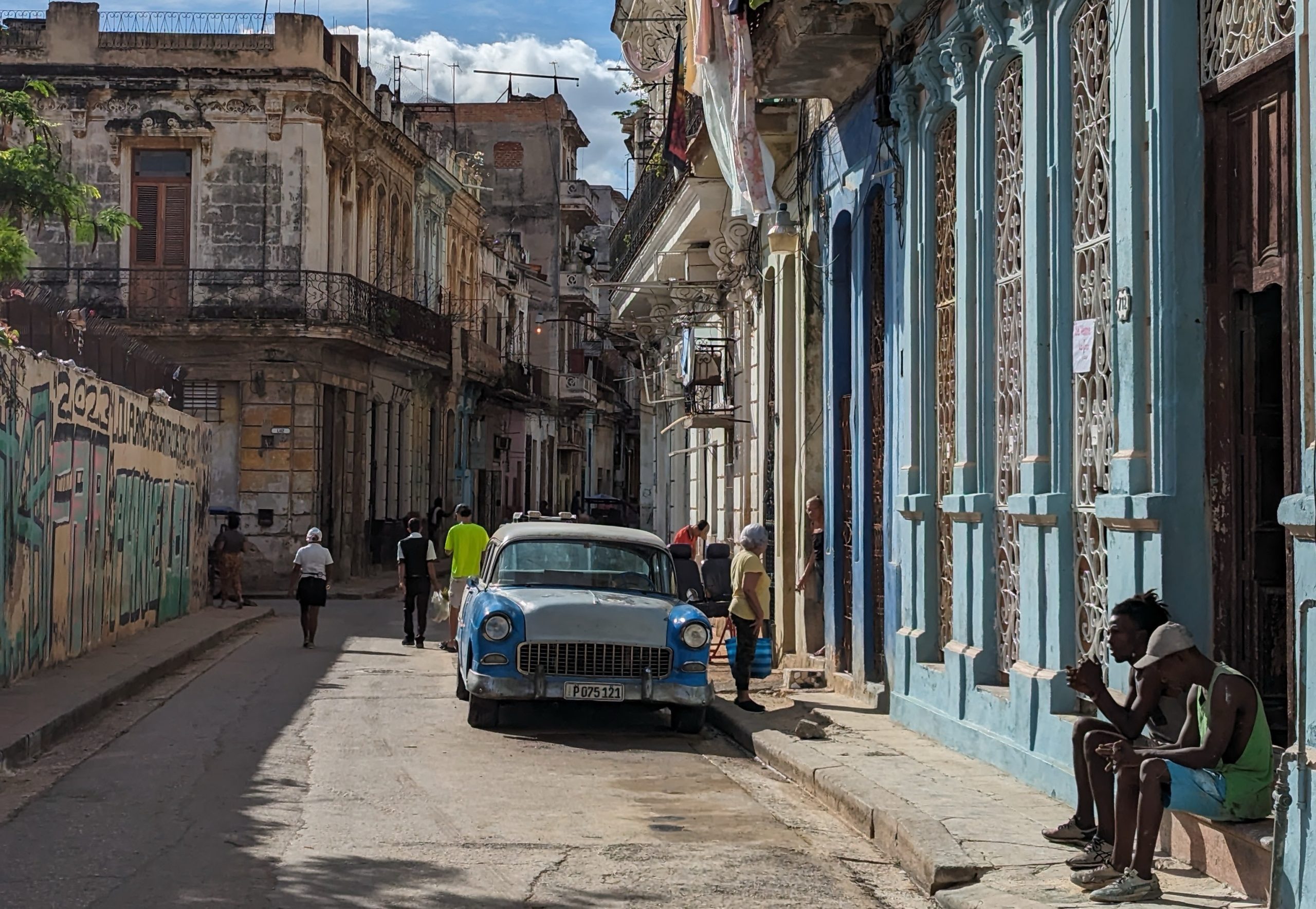
We spent the month of November visiting towns and cities in the west and center of Cuba. The possibility of visiting Cuba had intrigued us for many years, partly due to the mixed information we’ve received about life there. We wanted to learn about life in a place that seemed so distant from us. What we found was a beautiful country filled with selfless and fun people mixed with the adversity that Cubans face in their everyday lives.
Here are some of our initial thoughts on what we experienced during our one-month stay.
Resilience as a fundamental component of happiness
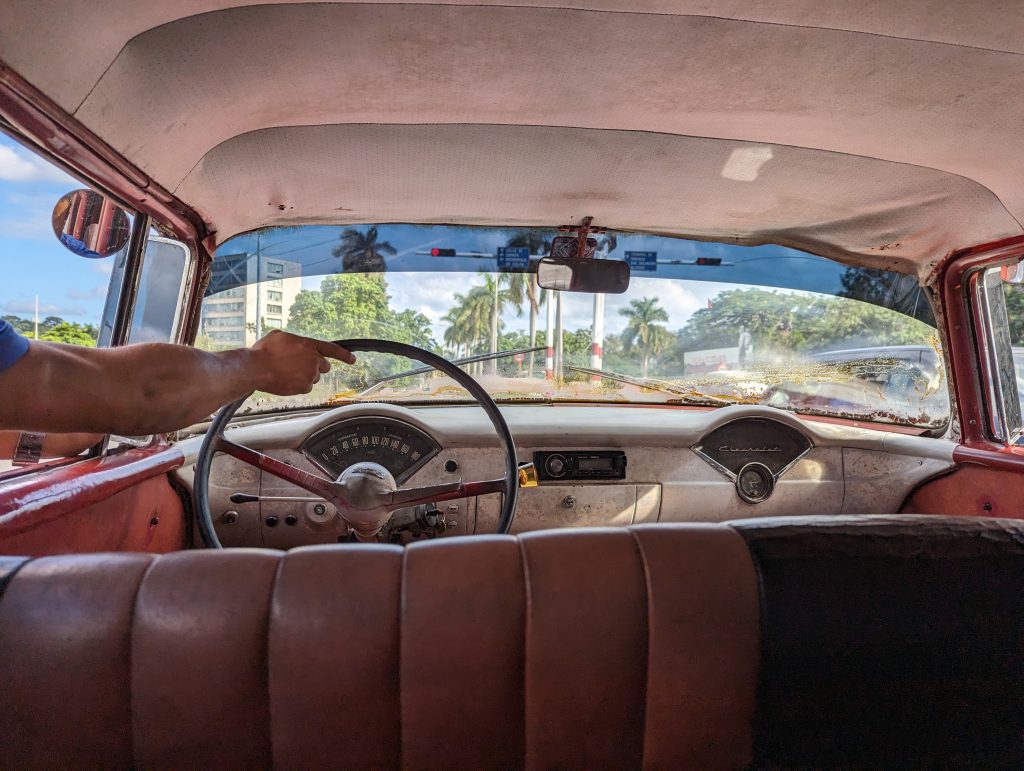
After a red eye flight from Bogota we arrived in Havana sleep deprived. A taxi was waiting for us. It was a 1956 Chevy and shortly before we reached our destination, it broke down. The driver and a helper got out to push the car over a small hill and it started up again. No fuss or complaints.
We come from a culture of high expectations, where small mishaps can cause a lot of frustration. Most Cubans have faced greater adversity and know how to solve problems with patience. They often wait in long lines for gas or for an ATM. They may have a sick relative at a great hospital with excellent doctors but with limited medicines available.
Our drivers laughed and made fun of adversity. They didn’t let a small mishap upset them. They were a great reminder of how resilience can make us happier.
Low environmental impact
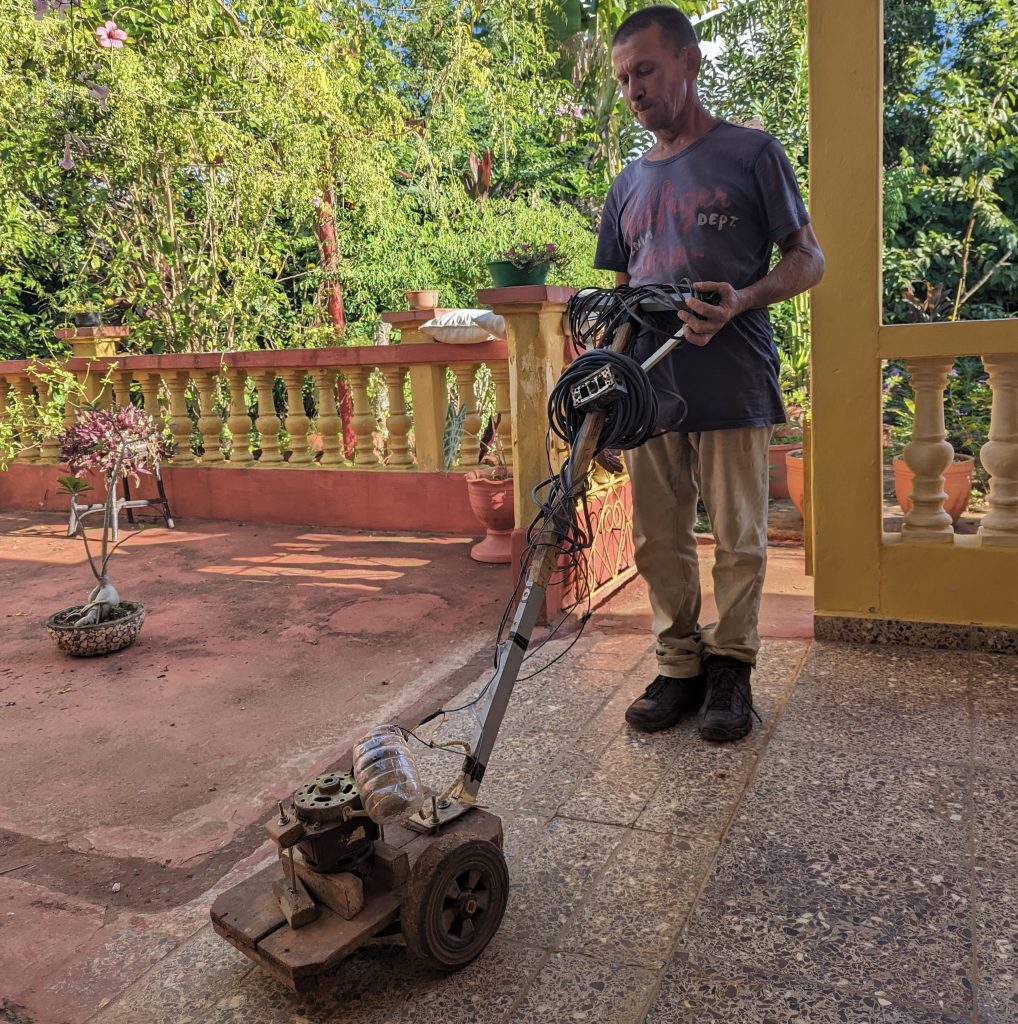
Due to economic conditions, consumption is very limited in Cuba. Given the comparatively less developed industry and technology and the difficulty of getting items from abroad, Cubans resort to reuse and recycle. An good example is the lawn mower one of our hosts had built. For this he used parts of a washing machine, telephone cable, and a machete. Our host had saved those items from a different fate at the dump while creating an eco-friendly machine with near-zero carbon emissions.
Examples like this abound, most famously in the classic cars that make up a large percentage of the vehicles on Cuba’s roads, and the ingenuity needed to keep them running for so many decades.
Generosity
We witnessed Cuban people sharing a lot (including with us) without expecting anything in return. The host family with whom we stayed in Viñales would look for things to give to our daughter: bananas, guavas, ice cream. They made us soup when we were sick. Our hosts probably gave us more than they could afford. And when their own child was sick a neighbor shared medicine.
From what we experienced Cubans spend a good amount of time sharing conversations too: with neighbors, acquaintances and family, during daily comings and goings. They are not alone.
Scarcity
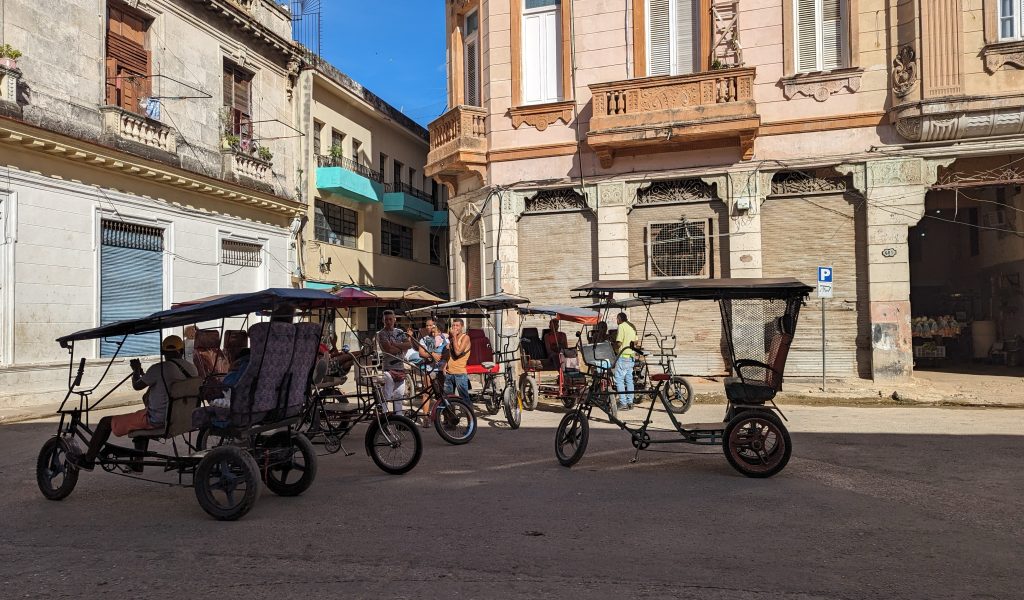
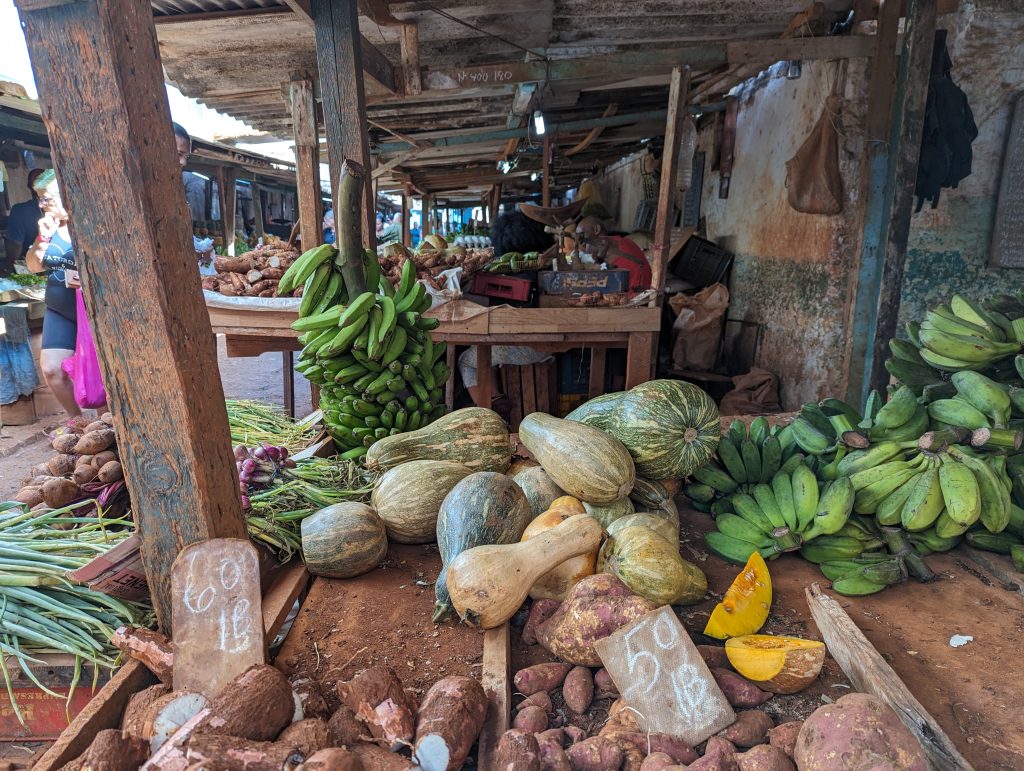
We wandered through local markets and found that there is not a wide variety in the groceries that can be acquired in Cuba. Tourists will most commonly notice scarcity in Cuba when learning that menu items in restaurants are in fact not available that day. But scarcity for locals runs deeper. It extends to cash availability at banks, gas, medicines, and household items that can take a bit more effort to find. Even during our short time in Cuba we had to adapt to living with the basics and understand our abundance of choices as a privilege.
Limitations of services and infrastructure
There is not a lot of capital to invest in infrastructure and services like trash collection and trucks to do the job. There is also a low supply of oil to power the old trucks they have. As such you will see things like trash piles in the streets and beautiful historic buildings that are about to perish. This creates a higher risk for communities that live near such hazards.
Socio-economic challenges
By all accounts, Cuba is undergoing a moment of adversity which has been deepened since the pandemic. Several reasons include Russia’s war with Ukraine, reducing the aid and oil sent to Cuba by one of its main strategic partners; Cuba’s long-standing debt with China, as a result of which China has reduced trade and aid sent to Cuba; and foremost, the US embargo, which complicates any trade in and with Cuba, even with other countries, as there are sanctions in place for Cuba’s partners. All macropolitical factors, and yet it is individual Cubans and families that feel these effects most strongly.
As we learned from many locals, Cubans’ salaries are low. The food essentials provided by the government, which have been shrinking over time, are not enough to feed a family. As a result, people look for ways to make money in the informal economy by selling and reselling goods and working in the tourism sector, for example.
Migration
Due to economic conditions, thousands of Cubans have left the island and continue to do so. As a consequence, families are separated, talent is spread thin and communities are disrupted. Cubans are in a continuous process of reinventing themselves and their communities.
Joy
Despite these challenges we witnessed a great deal of joy among locals. A commuter or a restaurant worker spontaneously singing. Neighbors stopping to share a laugh. Someone laughing at a driver pushing their car. The same driver laughing at his own misfortune. And the wonderful music and dancing everywhere. It’s not our place to make blanket statements about the Cuban disposition (e.g. “Cubans are happy by nature”), but we were privileged to have had the chance to share in their joy.

Bright spots in Cuban society that we didn’t experience directly include excellent education and healthcare systems. Many locals we met expressed pride in the guarantees that these institutions provide to all Cubans. And yet the lack of resources limiting them (e.g. medicines) is one of several sources of growing skepticism towards Cuban government policy as well as renewed frustration at foreign governments’ policies.
Our time in Cuba allowed us to make plenty of personal observations, mostly through conversations with locals. And yet we have to acknowledge that the reality for Cubans will always be more complicated than tourists like us can possibly distill from a short visit. Many questions remain for us. We look forward to continuing to learn and root for Cuba and its people as they navigate the adversity that political winds have blown their way.
A month in Cuba also gave us the chance to get used to some of the unique logistical considerations of traveling there, in case you’re planning a trip.