Viñales: A Paradise Valley

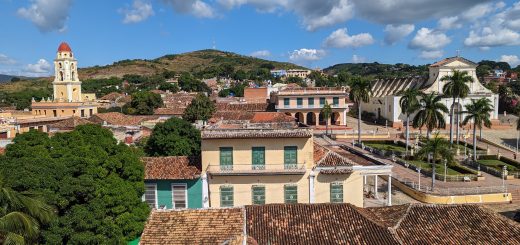
Viñales is a beatiful, laid-back town in Western Cuba and the largest tobacco production center in Cuba. But beyond cigars, the valley has been declared a UNESCO world heritage site. It mixes a dramatic landscape with transitional farming techniques.
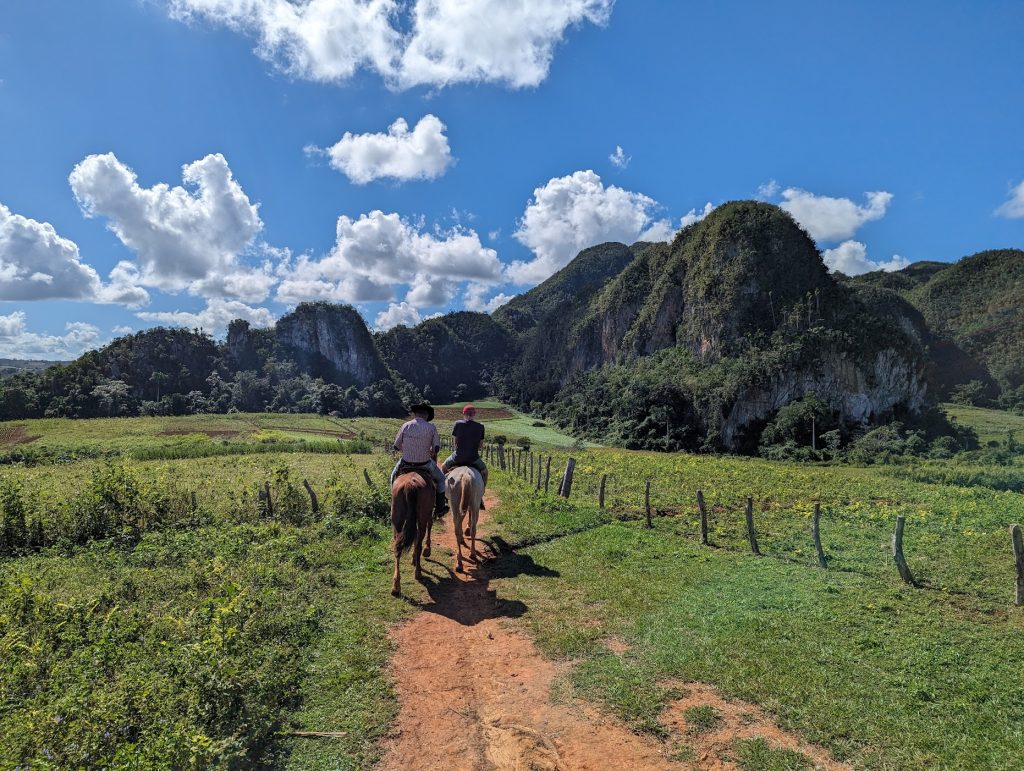
The landscape is unique for its chain of “mogotes,” or dome-like limestone formations. While highly touristic, Viñales maintains its agricultural roots in crops including coffee, yuca, beans, and plantains. And of course tobacco.
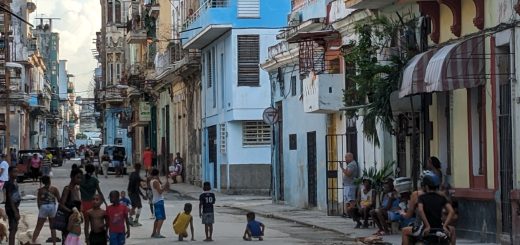
Viñales itself is small and relaxed, with one main street and just a few adjacent lanes. There are a few restaurants offering familiar Cuban fare (ropa vieja, roasted pork, etc.) and a some international options. In the valley and town itself it’s common to see tractors, oxen and carretas pulled by horses. As with other places in Cuba, there are some logistical considerations to keep in mind.
Things to do in Viñales Valley:
Visit Tobacco Farms
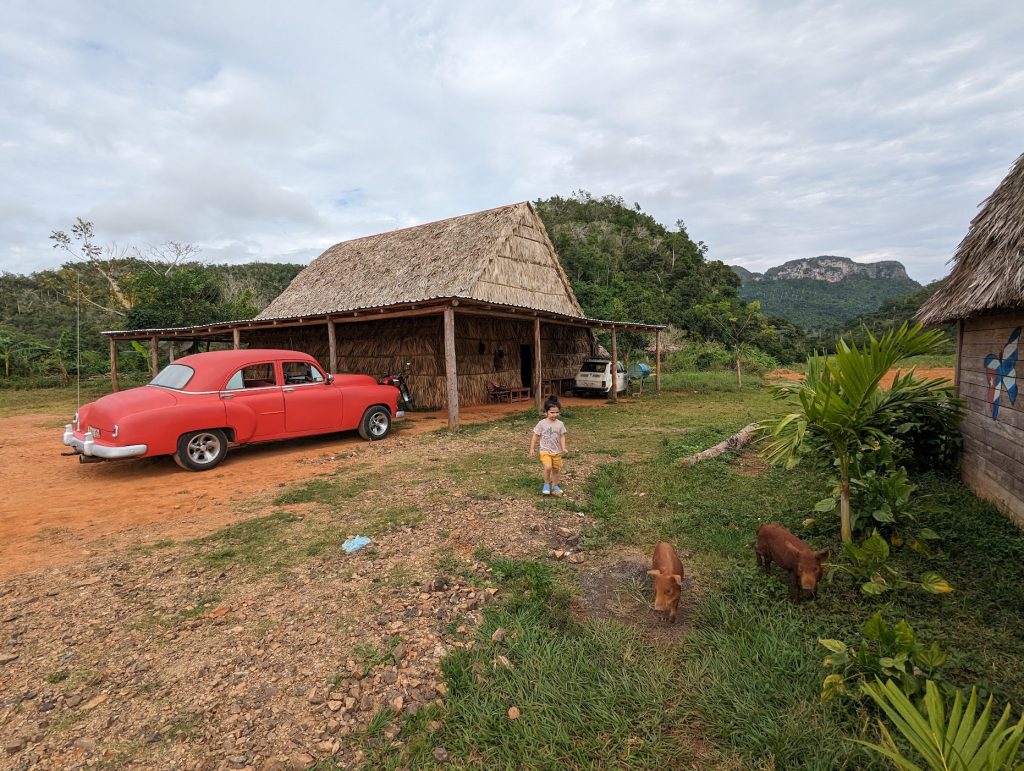
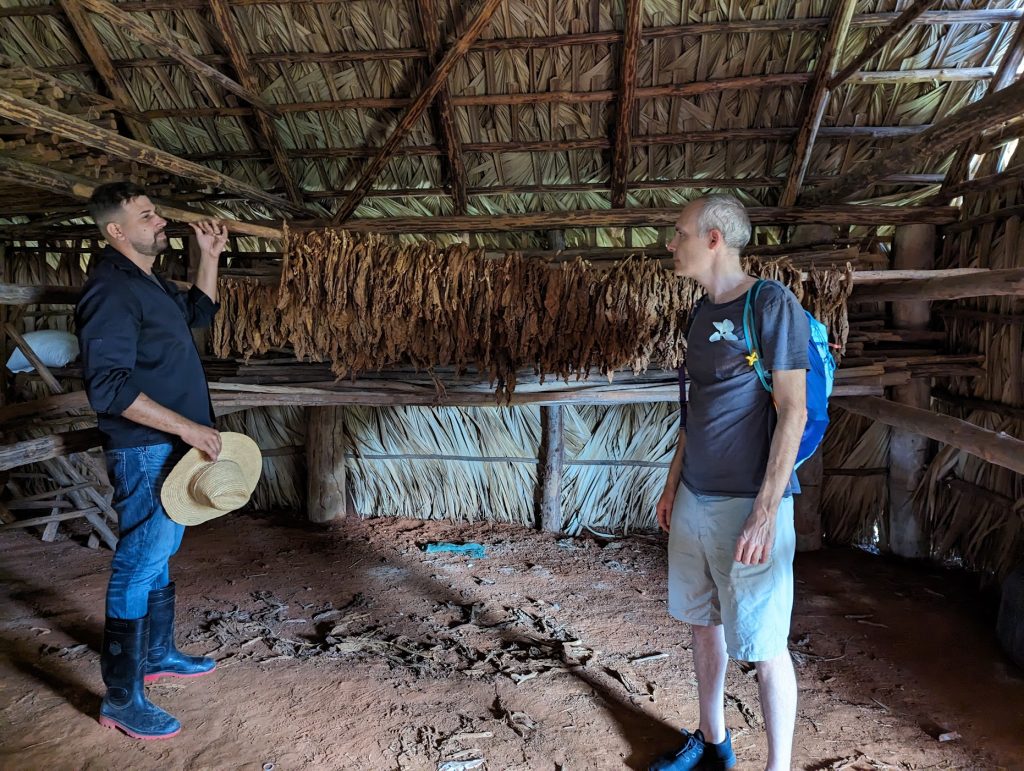
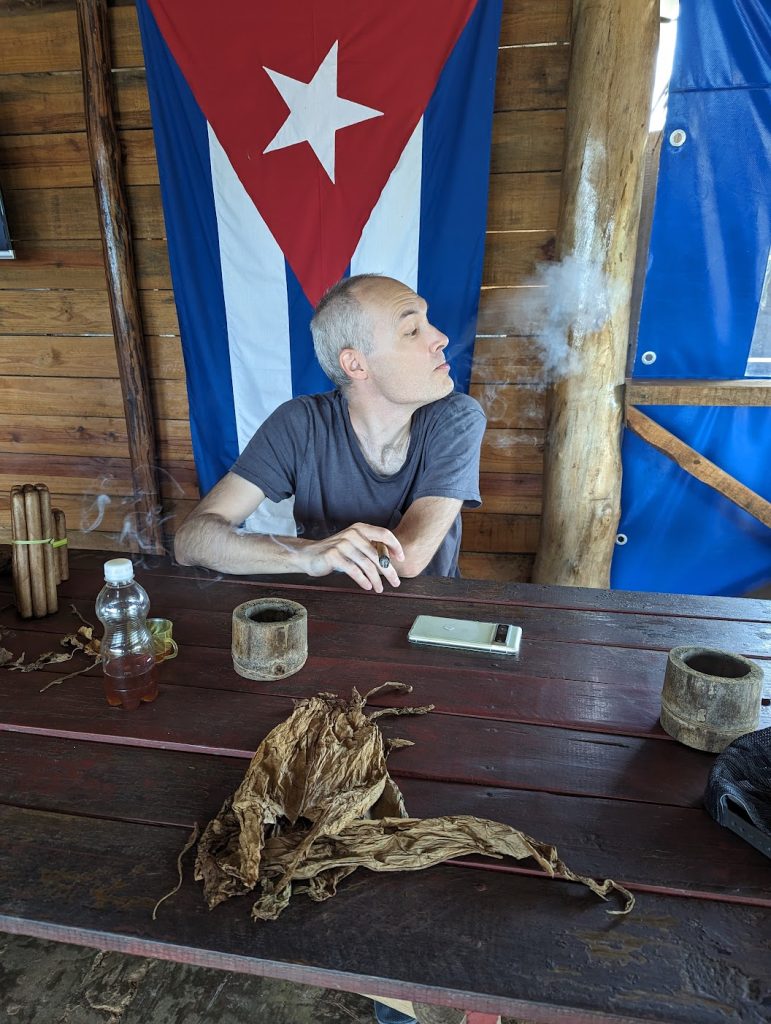
As part of a tour around the valley in a ‘52 Chevy, we got to visit a local tobacco farm. We learned about the cigar-making process and got to smoke one. As our daughter said, “daddy made smoke in his mouth.” If you enjoy cigars, you’ll be excited to know that you can acquire cigars in a rare form. Most Cuban tobacco is sold to the government, as required. The government uses the veins of leaves (high in nicotine and bitterness) so as not to waste anything. Farms like the one we visited often omit the vein in cigars. Instead they often use this part of the leaf in natural insecticides. Farmers are allowed to sell a small percentage of their cigar products directly to consumers.
It wasn’t the season for tobacco production but we saw a display of leaves in different stages of the process. We’re not cigar people but it’s fascinating to be immersed in the sights, sounds, and smells of the farm and learn about tobacco’s crucial role in Cuba’s history.
Hike to one of the view points
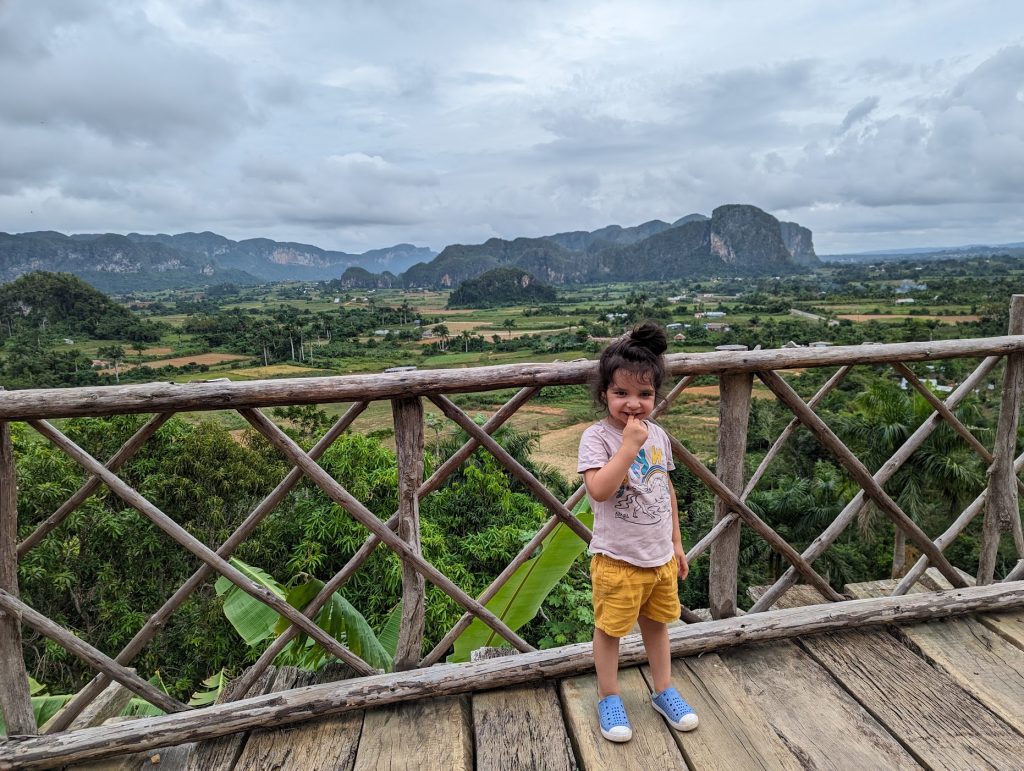
After visiting the farm, we took a short hike to a view point called El Canopy which had outstanding views of the Viñales valley. The place was privately owned and we had to pay a small fee to enter, which gave us access to well-maintained paths. There were no signs as it was supposed to be a short hike but we managed to get lost for 20 long minutes until we were able to find our driver. From the view point it is easy to see the freshly plowed land and the peacefulness of the place. Our tour ended with a visit to the Prehistoric Mural, a huge painting on the rock face of a mogote.
Explore the Viñales valley by bike
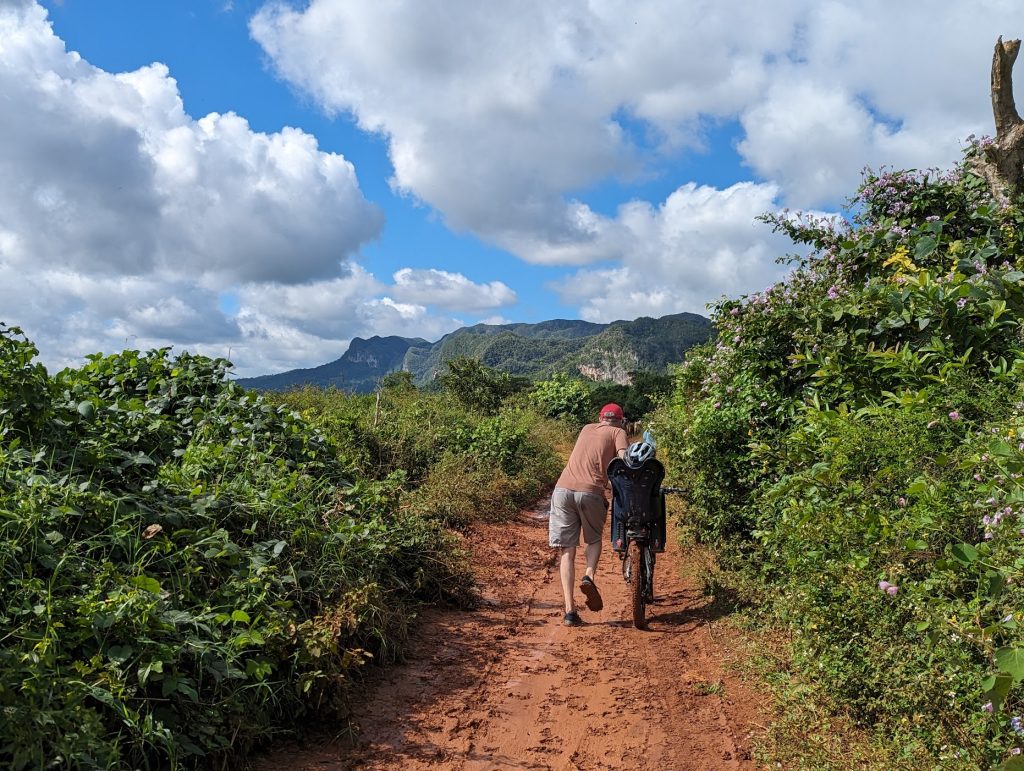
We rented bikes in town and were lucky to find “the only bike seat in town” for our daughter, Vienna. We started north of town (mostly downhill) for about two miles, then turned left onto a horse path. It had rained the day before and there was a lot of mud. We soon encountered peasants riding horses and oxcarts. The mud was difficult and we were putting all our muscle power (which is not much) into pedaling. When we were about to give up, a local woman passed us on her bike. After a short conversation she took us to a nearby farm, mostly walking our bikes. This was lucky as it was a wonderful place to rest with a lemonade and mango juice. Vienna got to play with the piggies for a while. Then we rode back. It was about 90 degrees out so not easy for us but big efforts come with big rewards. This was an unforgettable ride.


Horse riding
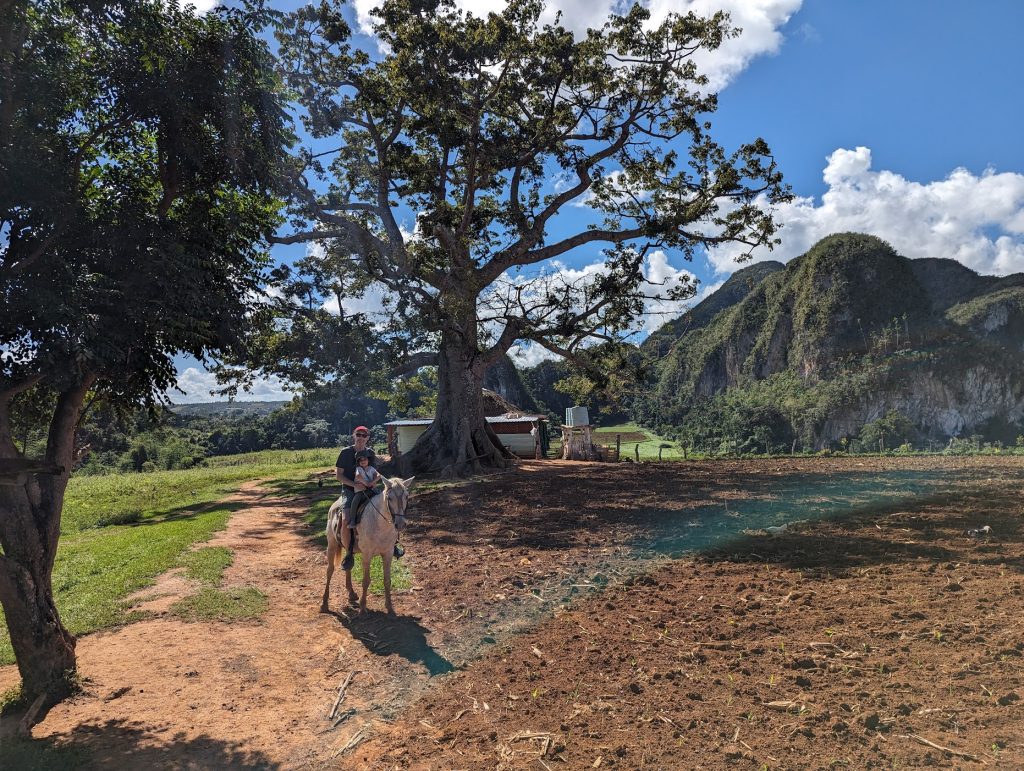
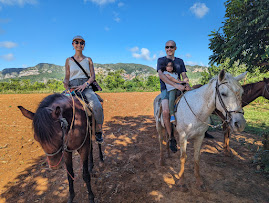
This is by far the most popular option for visiting the Viñales valley, and much easier than bikes. Vienna had seen so many horses during our stay and wanted to ride on one. We got to appreciate the beauty of the valley from a different perspective. And this time we learned about honey production in a local farm.
Where did we stay?
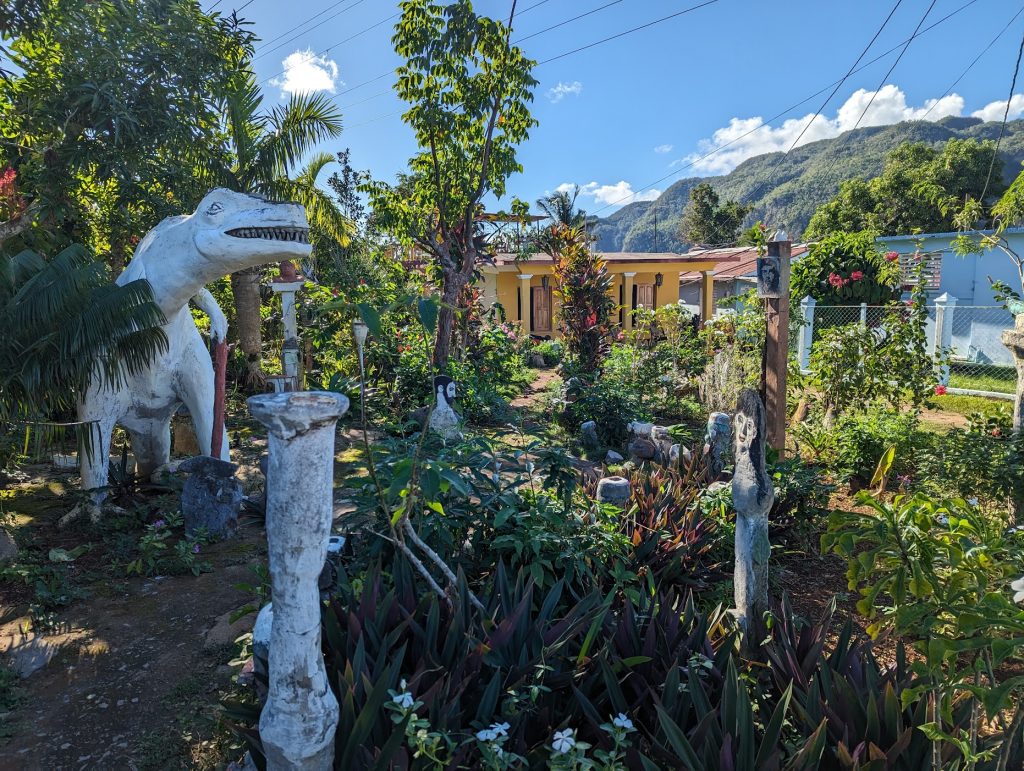
In Viñales valley we stayed in a four-generation household. Out of all our stays in Cuba this was the one I cherish the most. The woman who runs the house, Luisa, now in her 50’s, spent most of her day cleaning the patio, washing clothes for her seven-person household, preparing breakfast for guests, attending the needs of the elders, caring for her sick grandson… no time to rest day after day. Her brother attended to other needs of the house. He made sure there was water in the tanks and looked after a small farm nearby. Ingeniously, he had created a lawn mower with scraps including a washing machine engine, machete blades, and telephone cable.
Luisa’s father, now in his 80’s, would come every day to give us a tour in his garden. Luisa’s mom would come and bring Vienna bananas or anything she could find handy. If they saw that we were in our bedroom, they would check in or have a conversation through the open door or window. We were overwhelmed with emphatic love and care.
How did we get there?
Cuba has a reliable system of public buses connecting main cities. It is relatively inexpensive (for tourists but unfortunately inaccessible to the locals) We took a bus from Havana to Viñales. It took about three hours to get there and was an easy ride mainly on flat highways.
Viñales in a Nutshell:
Population: 28,720 as of 2018
Usual price for an Airbnb: $20-$30 USD
What we liked the most: The tranquility surrounding the beautiful valley
What was challenging: We all got food poisoning one night and had no kitchen of our own to cook light meals during that time