
WWOOFing in Wöhle, Germany
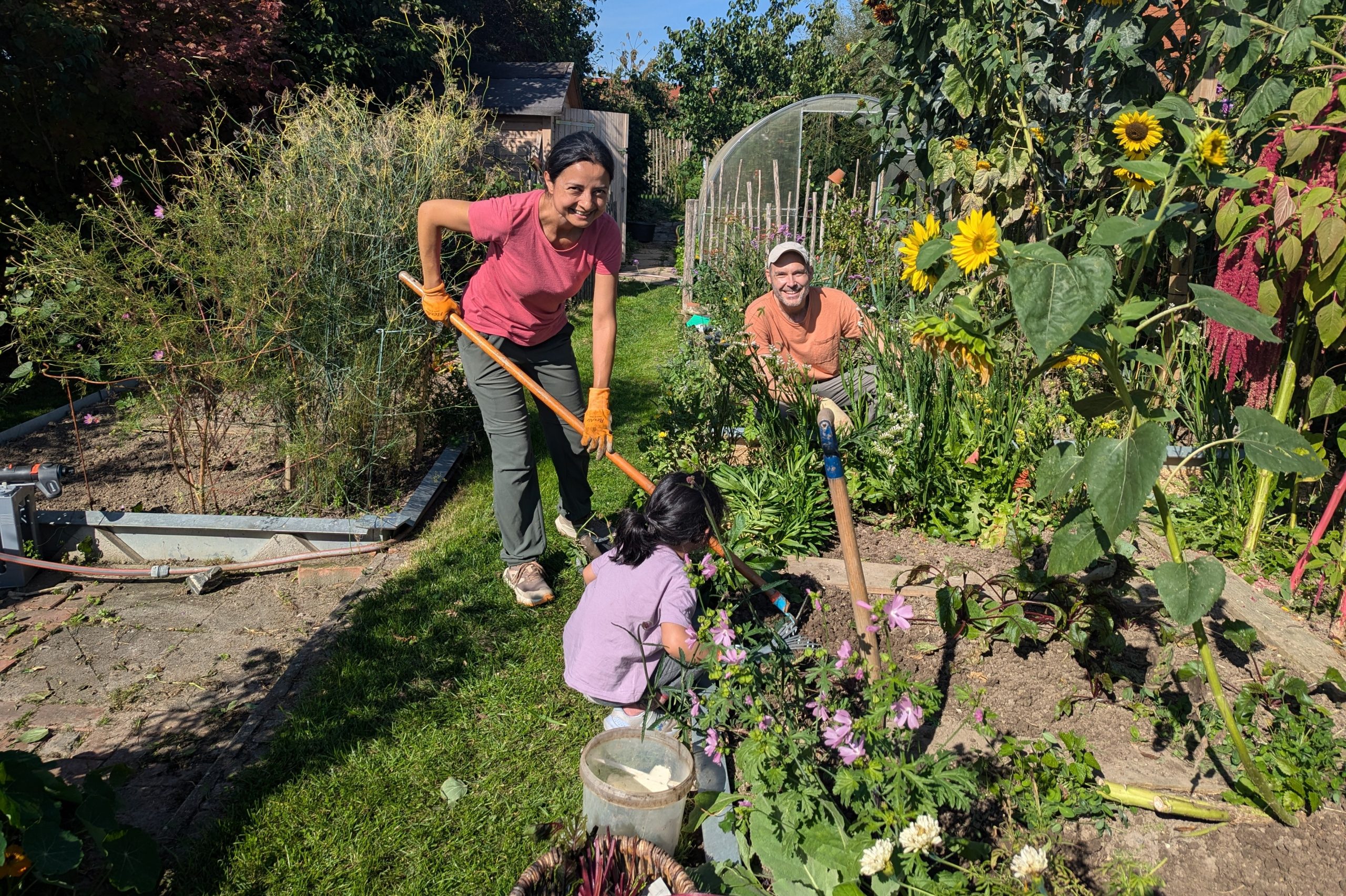
Having long known about Worldwide Opportunities on Organic Farms, WWOOFing was among our top possibilities for a gap year activity. Wherever it is we settle down, we’d like to grow some of our own vegetables and herbs. Learning more about this from a family abroad combined this goal with our appreciation for cultural exchange. We gave it a shot in Germany for three weeks in September.
How it Started
After exchanging a few messages with a family we found through the WWOOF Germany online platform we set up a video call to learn more. We wanted to make sure we were on the same page in terms of our expectations for the experience. Since we would be WWOOFing with a toddler, we wanted to know we’d have a comfortable, safe, and homey living space with people we felt good about. Ultimately we were happy with the decision we made. In many ways our experience exemplified our belief in the power of cultural exchange and experiential education programs.
For those unfamiliar, WWOOFing is a way for anyone interested in learning and helping out on an organic farm to do so by staying on the property of farming hosts. In exchange for a recommended 4-6 hours of work, five days per week (this can vary) hosts should provide room and board and insight into their ways of life and farming. There are hosts worldwide and living arrangements include camping, cabins, or living in the same house as the family. Before committing, travelers can browse online listings and reviews from previous travelers to learn about hosts, farms, and living and eating arrangements.

The Personal Connection
We sought and found an experience with a strong human interaction element. This meant shared meals, hangout time in the kitchen, and sometimes working side-by-side. Awkwardness is a part of relating with new people. There is no way around that and we wanted to embrace this in a way that offered insight into a new place and a different way of life.
We had no illusions that living with just one north German family would somehow paint a complete picture of life and culture in Germany. For us — and this is true for so much of our travels — it’s more about how small slivers of life among new people and places can remind us that there are other ways of existing and interacting, and that we stand to learn something from this. (And yes, also experiencing uniquely specific about a place even if the boundaries between culture, subculture, family and personality are blurry.)
Putting on the Work Gloves
The hosts we stayed with are not full-time farmers and both worked unrelated, full-time jobs during the week. Their spaces dedicated to farming consisted of large gardens, two small greenhouses, and a yard with a few fruit trees. This was a good fit since we don’t plan to do extensive farming in our own home. Mainly we wanted to learn more about what we’ll be able to handle in terms of growing some of our food wherever we end up living.

Generally speaking, the activities our hosts wanted us to work on felt appropriate given our goals and the broader purpose of the WWOOF program. Weeding, pruning, harvesting (tomatoes, potatoes, apples, pears, plums, herbs, etc.), tilling soil, cleaning garden tools, and taking out the kitchen compost each morning were among our work tasks. The family also owned seven ducks, which helped control the slug population on the property. We set out the ducks’ food each night, and cleaned the small pools they used around the yard as well as their house. I used a shredder to break down branches for the compost.
We also enjoyed seeing (and participating in) how our hosts preserved some of their foods and flowers through the jamming and drying processes. We come from a place where there is a disgusting amount of food waste. So many vegetables end up going bad in refrigerators. It was inspiring to see how our hosts made the most of their produce.

WWOOFing can also entail tasks that aren’t directly related to organic farming. In our case that meant things like sanding and painting furniture, prying out old nails from the wall of a shed, and cleaning shared spaces in the house. The latter felt like a normal part of being “housemates.” We were staying in our hosts’ home so it didn’t strike us as odd that we should help out a little with house chores.
Working on behalf of the people with whom you live can be a humbling experience. And we think being humbled once in awhile is a good thing, perhaps especially if you come from a background of economic privilege. It’s a way to work on calming your ego in favor of simply performing necessary tasks.
For aspiring WWOOFers, it’s essential to discuss prior to committing with any hosts what kinds of activities you will do during your stay so you can consider whether you’d feel comfortable with them. A bit of flexibility is crucial as well, since the needs of a farm can change.
WWOOFing With Kids
We loved the fact that our three-year-old daughter could help out with many of the above activities without there being a sense that she was in the way. Our hosts were flexible in our use of time and how we managed it while caring for our daughter, which helped. But we enjoyed the fact that Vienna could really give us a hand with certain things like cleaning the duck ponds and feeding them, peeling garlic, weeding, and so forth.
Not all WWOOF hosts are open to hosting children but there is a filter in the search tool on the WWOOF online platform and app that allows you to see which hosts are willing to have kids along.

Cultural Activities and Free Time
Ideally, WWOOFing is also a chance to explore locally on your days off and to get a sense of local culture. In our case we took the local bus to a small city called Hildesheim several times where we were wowed by historic architecture and enjoyed a performing arts street festival. Our host gave us a ride to a local art museum and nature preserve one day, which we loved. And our daughter Vienna enjoyed a pony ride through the surrounding farms and forest.


In addition to these planned cultural activities, there is also interaction with hosts that may or may not happen during meals and while working, depending on the farm. In our case there was a lot of this so we got to know about the family, their lives, their experience being locals to the region, and maybe a few words of German. We liked that our daughter was exposed to another language as we’re trying to raise her bilingually.
Digging Deeper
There are 12,000+ WWOOF hosts in over 130 countries. The program has a long history of over 50 years. To learn more about the program you can visit the main WWOOF site, which in turn links to the specific websites for individual country networks. Each country network has a small fee (normally not much more than 50 USD) for joining and accessing the host-WWOOFer communication portal.
If you’d like to learn more about our experience, feel free to reach out!